01/ 13
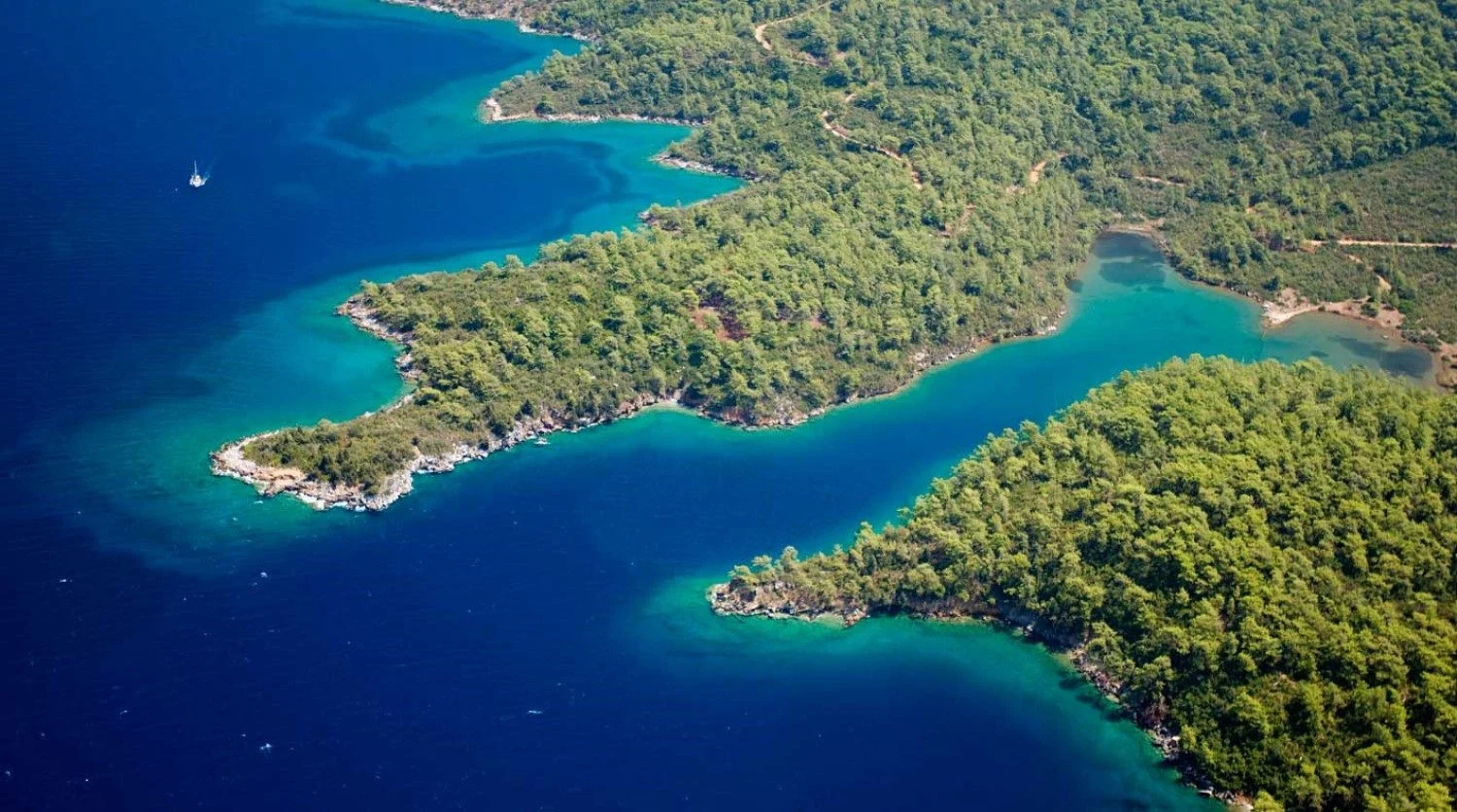
The protection and restoration of marine and coastal ecosystems must be accelerated.
In line with the 2030 targets of the Kunming-Montreal Global Biodiversity Framework, adopted under the Convention on Biological Diversity to which Türkiye is a party, the protection and restoration of marine, coastal and terrestrial ecosystems must be prioritised. In line with Target 2, the restoration of degraded marine, coastal and terrestrial ecosystems must be accelerated. In line with Target 3, the aim must be to protect and manage at least 30 per cent of marine and coastal areas effectively, equitably and sustainably. In line with Target 6, the impacts of invasive alien species on biodiversity must be reduced and efforts to manage these species must be strengthened. In line with Target 8, approaches that reduce the impacts of climate change and ocean acidification on biodiversity and increase ecosystem resilience must be adopted. In line with Target 14, biodiversity must be integrated into the policies, planning and decision-making processes of all sectors.
02/ 13
Effective, measurable and sustainable management mechanisms must be established in marine protected areas.
In addition to declaring new protected areas, the implementation and enforcement capacity of existing areas must be strengthened. For protected status to be realised on the ground, mechanisms for regular monitoring, active enforcement, scientific assessment and inter-institutional coordination must be developed. Practices that support active protection and monitoring in the field, such as Marine Ranger Systems, must be expanded, and local protection capacity must be strengthened.
03/ 13
Marine and terrestrial ecosystems must be addressed together on the basis of ecological integrity and connectivity.
Climate and biodiversity policies must not treat marine and terrestrial ecosystems independently of one another. The ecological connections of coastal wetlands, lagoons, estuaries, coastal forests, seagrass meadows and other sensitive habitats must be taken into account, and the pressures of coastal development, pollution and land use must be managed through an integrated approach.
04/ 13
Scientific monitoring and early-warning systems must be developed for the impacts of climate change on marine ecosystems.
Rising sea water temperatures, marine heatwaves, the spread of invasive alien species and changes in ecosystems must be monitored regularly, and scientific data must be integrated into decision-making processes. Climate change adaptation policies must be supported by early-warning and response mechanisms that take into account the vulnerabilities and critical thresholds of ecosystems.
05/ 13
Marine carbon sinks and nature-based climate solutions must be integrated into national climate policies.
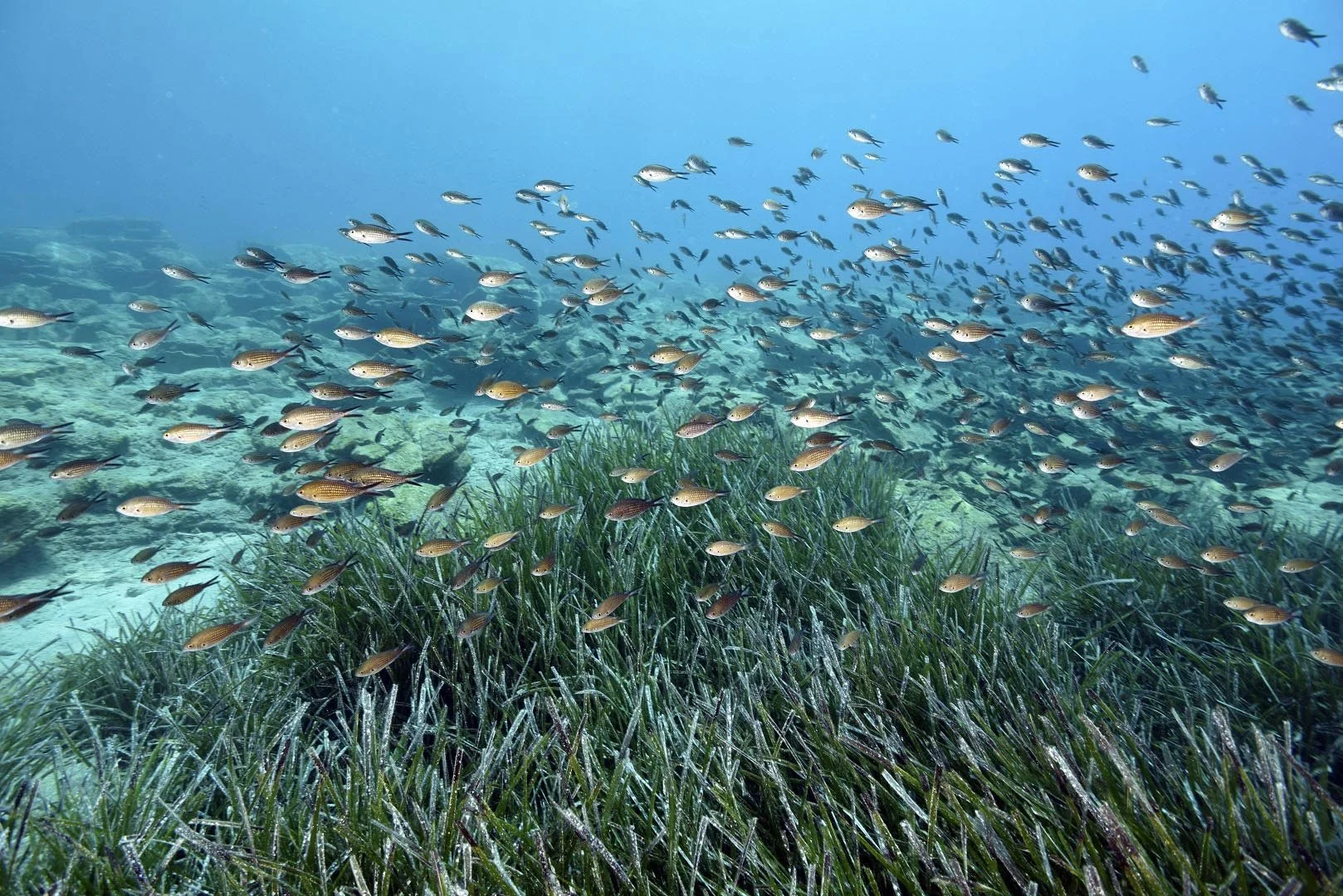
In line with the mitigation and adaptation goals of the Paris Agreement, the protection and restoration of blue carbon ecosystems, above all seagrass meadows, must be prioritised. In addition to the carbon storage capacity of these ecosystems, their contributions to biodiversity, coastal protection and ecosystem resilience must also be taken into account.
06/ 13
Long-term, accessible and sustainable financing mechanisms must be developed for nature-based solutions.
Long-term financing models must be established for the protection, restoration, scientific monitoring and effective management of marine and coastal ecosystems. Conservation efforts must not be limited to project durations, and the continuity of local implementation capacity and of conservation activities in the field must be guaranteed. Alongside public funds, the private sector’s contribution to nature conservation must go beyond short-term sponsorship and corporate social responsibility projects. To this end, tax and regulatory measures that encourage the private sector to provide long-term support for the protection of marine and coastal ecosystems and for civil society organisations working in this field must be introduced, and blended finance models and multi-year partnerships must be supported. Private-sector financing must be provided in accordance with the principles of transparency, accountability and the independence of civil society, and its use for greenwashing must be prevented.
07/ 13
The rights, livelihoods and traditional knowledge of coastal communities must be an integral part of conservation policies.
The rights, economic and social needs, and traditional knowledge of marine ecosystems of communities that derive their livelihoods from the sea, above all small-scale fishers, must be taken into account in decision-making processes. Conservation measures must be designed with the effective participation of local communities and in a way that supports the sustainability of their livelihoods. In the management of marine protected areas, local communities must be able to participate effectively in decision-making processes, and sustainable fishing practices and economic activities compatible with conservation must be supported. In these processes, the fair sharing of the ecological and economic benefits provided by protected areas must also be ensured.
08/ 13
Underwater cultural heritage and cultural values associated with the sea must be included in conservation policies.
Marine and coastal areas must be protected not only for their natural resources and biodiversity but also for their historical and cultural values. Underwater archaeological heritage, historic shipwrecks, coastal cultures, and traditional maritime and fishing knowledge must be treated as an integral part of marine and coastal management. Cooperation among the relevant institutions must be developed so that this heritage is protected, passed on to future generations and used sustainably.
09/ 13
The role and implementation capacity of local governments in marine and coastal management must be strengthened.
The sustainable management of coastal areas requires strengthening the planning, implementation and enforcement capacity of local governments. Cooperation and coordination mechanisms must be developed among local governments, the relevant public institutions, scientists and civil society organisations.
10/ 13
Fisheries and other marine use policies must be reconsidered through an ecosystem-based management approach.
Policies on fisheries, tourism, maritime transport and coastal use must be shaped by taking into account the carrying capacity of marine ecosystems and their impacts on biodiversity. Overfishing and unsustainable use pressures must be reduced, and fisheries restricted areas and other effective area-based conservation measures must be supported in line with scientific data. Sustainable fishing practices and management models that safeguard the long-term continuity of marine resources must be encouraged.
11/ 13
Scientific data sharing, transparency and inter-institutional coordination must be strengthened.
Scientific data sharing and joint monitoring mechanisms must be developed among public institutions, academia, civil society and the private sector. Data on the state of marine and coastal ecosystems must be accessible and transparent, and these data must be used effectively in developing and implementing conservation policies and in measuring their results.
12/ 13
Regional cooperation and shared conservation goals at the scale of the Mediterranean must be strengthened.
Under the Barcelona Convention, to which Türkiye is a party, cooperation among Mediterranean countries on protecting marine and coastal ecosystems, reducing pollution, adapting to climate change and monitoring biodiversity must be increased, and the sharing of data and experience must be made more effective. Given the transboundary nature of marine ecosystems, joint scientific studies, monitoring systems and conservation measures must be supported.
13/ 13
The protection and restoration of coastal wetlands must be made an integral part of climate policies.
In line with the Ramsar Convention and the Sustainable Development Goals, the protection and restoration of coastal wetlands, lagoons and other sensitive coastal habitats must be prioritised. In line with the relevant global goals, above all Sustainable Development Goal 14 (Life Below Water), national measures to reduce marine pollution, prevent overfishing and promote the sustainable use of marine ecosystems must be strengthened.