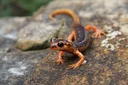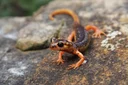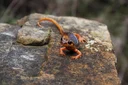

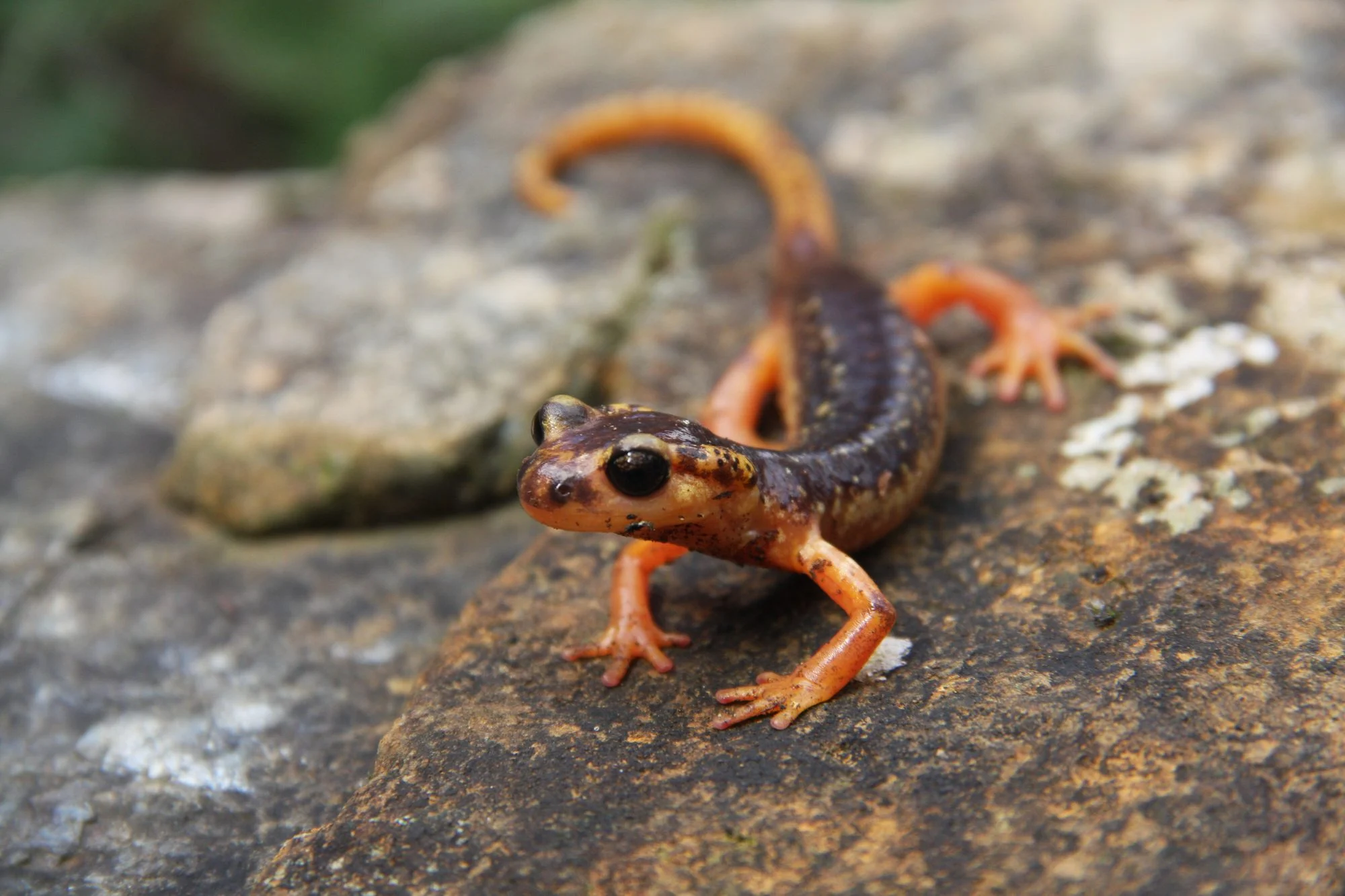
The Mediterranean Conservation Society predicts that the habitat of the Marmaris salamander, which lives only in Muğla anywhere in the world, could shrink by 62% over the next 50 years.
What does the modelling show?
As a result of our observations and studies, we predict that over the next 50 years a large part of the Marmaris salamander’s habitat will decline owing to intensive land use, land conversion and climate change. For this reason, preserving the current state of the species’ habitats and taking national and regional measures against global climate change are important steps for the Marmaris salamander to continue to exist.
Amphibians under threat
- Species lost in the last 500 years
- 800+
- Amphibian species threatened with extinction
- %42
According to a report published by the International Union for Conservation of Nature, more than 800 species have gone extinct around the world in the last 500 years. Of the amphibian species discovered on Earth, 42%, that is, roughly one in every two frog species, is threatened with extinction. There are many reasons for the loss of these species, but the most fundamental is human activity. The increasing effect of climate change in recent years has, sadly, raised the level of threat to the lives of many species.
So that the Marmaris salamander is not added to the world’s list of extinct species, for the last three years we have been working with Ege University, the 4th Regional Directorate of the Ministry of Agriculture and Forestry, the Muğla Branch Directorate of Nature Conservation and National Parks, the Marmaris National Parks Directorate and Marmaris Municipality. This work has made the Marmaris salamander one of Marmaris’s flagship species, like the sweetgum tree. Individual changes in behaviour are extremely important for the species to be protected. For this reason, we attach importance to acting together with the people of Marmaris and the surrounding villages, particularly those who graze livestock and keep bees.