
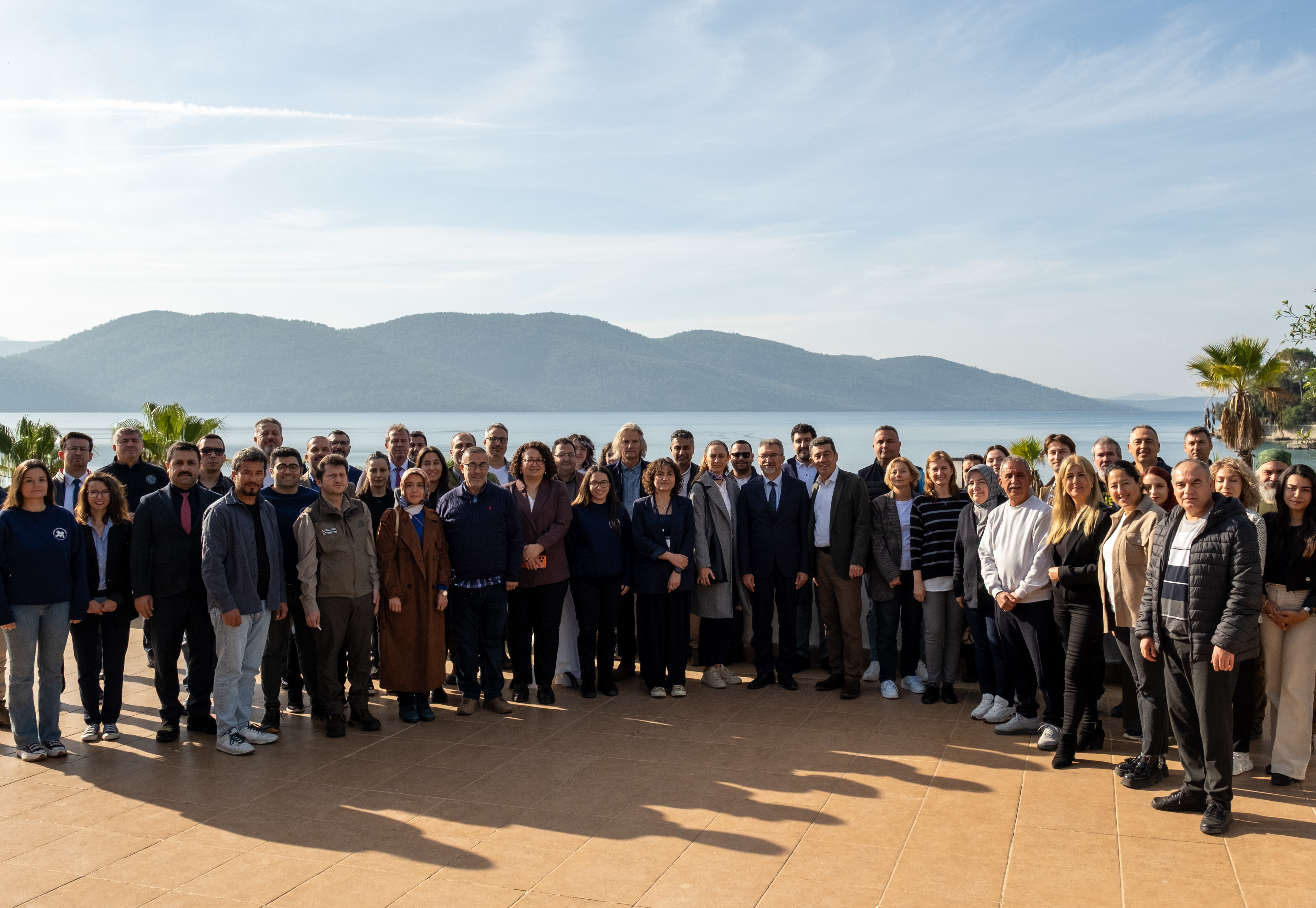
We convened a comprehensive workshop in Akyaka to present the outcomes of our long-standing scientific monitoring efforts and community-based marine conservation projects in the Gökova Special Environmental Protection Area.
The workshop, titled “Project Outputs and Scientific Monitoring Results in the Gökova Special Environmental Protection Area” was opened by our Chairman Zafer Kızılkaya, who delivered a presentation on “The History of the Mediterranean Conservation Society(AKD)’s Conservation Efforts in Gökova.” Since 2012, the research, monitoring, and community-based conservation work carried out in Gökova has played a significant role in protecting the region, strengthening ecosystem health, and contributing to the development of sustainable use policies.
Following the opening, Assoc. Prof. İnci Tüney (Ege University, Faculty of Science; AKD Scientific and Technical Advisory Board Member) shared the findings of macroalgae studies and monitoring results. Prof. Dr. Zafer Tosunoğlu (Ege University, Faculty of Fisheries; AKD Scientific and Technical Advisory Board Member) then presented the fishing gear trials conducted to evaluate the potential economic use of non-indigenous species, and the catch data collected from cooperatives. Prof. Dr. Nedim Özdemir (Muğla Sıtkı Koçman University) provided insights into the seasonal variation of freshwater resources feeding Gökova; Prof. Dr. Kerim Çiçek (Ege University, Faculty of Science) shared results from herpetofauna and wetland studies; and Sedat İnak and Şebnem Samsa discussed key threats to birds and the Gökçe Wetland. Together, these presentations offered valuable data reflecting the holistic structure of the ecosystem.
In the afternoon session, within the scope of the Endangered Landscapes Programme (ELSP) completed in 2024, Dr. Ezgi Saydam, Serena Pennetti, and Bengi Atay (AKD Scientific Monitoring Team) presented the outcomes of monitoring activities on the Mediterranean monk seal and sandbar shark. Zafer Kızılkaya followed with ecological monitoring results on the effects of no-take zones. Dr. Tunca Olguner presented data on water temperatures and biomass of non-indigenous fish species, highlighting the scale of ecological shifts in the region. Gizem Akdoğan (AKD Secretary General) and Taner Özcan (Procurement Officer) discussed the process of integrating edible non-indigenous species into the local economy, and the programme continued with a presentation on conservation communications by İlkay Kavak (AKD Communication Coordinator). The workshop concluded with an interactive Q&A and feedback session.
Throughout the day, the presentations reaffirmed that Gökova is a critical area not only for biodiversity but also for community-based conservation models and sustainable use. Hosting sensitive species such as the Mediterranean monk seal and sandbar shark, the region faces pressures from climate change, tourism, and non-indigenous species—making collaborative decision-making and evidence-based conservation strategies essential.
We extend our gratitude to all public institutions, researchers, NGOs, and local partners who contribute to the protection and future of Gökova.
Protecting our seas is only possible through knowledge-sharing, collective wisdom, and joint action.