
Origins of the UNESCO World Heritage Concept
The concept of UNESCO World Heritage emerged in the 1960s, when Egypt’s Abu Simbel Temples faced the threat of submersion due to the construction of the Aswan High Dam. Through an unprecedented international rescue campaign, the temples were relocated and reconstructed on higher ground. This initiative reminded the world that certain cultural and natural sites possess “outstanding universal value” — belonging not only to a single nation, but to all of humanity.
What Is Cultural and Natural Heritage?
Cultural heritage includes monuments, historic structures, archaeological sites, and artifacts that illuminate human history.
Natural heritage encompasses ecosystems, geological formations, and habitats of threatened species that hold exceptional universal value.
Türkiye has been a State Party to the UNESCO World Heritage Convention since 1983. As of 2025, 22 sites are inscribed on the World Heritage List, while 79 sites are included in the Tentative List (UNESCO National Commission of Türkiye).
Why Is Cultural Heritage Important?
Cultural heritage preserves the memory of humanity while strengthening identity, social cohesion, and a sense of belonging. As the climate crisis intensifies, safeguarding heritage is crucial not only for cultural continuity but also for a sustainable future.
How Does the Climate Crisis Affect Cultural Heritage?
Cultural heritage is increasingly threatened not only by human activity but also by climate-driven processes.
In the Mediterranean basin, climate impacts such as sea-level rise, coastal erosion, severe storms, and ocean acidification directly endanger coastal archaeological sites and underwater cultural heritage.
Underwater shipwrecks are particularly vulnerable: shifts in sea level and increased biological activity accelerate metal corrosion and degrade wooden structures. Similarly, erosion along coastlines threatens settlements ranging from the Neolithic period to the Ottoman era, increasing the risk of partial or total loss.
Climate-driven ecosystem changes also weaken natural protective barriers — such as seagrass meadows and coral communities — leaving underwater heritage even more exposed.
UNESCO’s Warning
According to UNESCO, climate change is one of the greatest threats facing World Heritage sites. Melting glaciers, coral bleaching, forest fires, and floods are among the most visible impacts. Yet World Heritage sites are also part of the solution: World Heritage forests absorb ~190 million tons of CO₂ annually, marine World Heritage sites hold 15% of global blue carbon stocks, traditional knowledge offers vital insights for building a sustainable future.
UNESCO data shows:
One-third of cultural World Heritage properties lie in coastal areas and are at risk from flooding and erosion.
60% of World Heritage sites in the Mediterranean face coastal flooding and erosion risks.
60% of World Heritage forests and marine heritage sites are threatened by human and climate pressures (fires, floods, cyclones).
Nearly all coral reefs on the World Heritage List are expected to face annual bleaching events by 2050.
Every +1°C increase doubles the number of species exposed to dangerous climate conditions.
How Can We Protect Cultural Heritage from the Climate Crisis?
Safeguarding cultural heritage in the face of climate change requires action in four key areas:
Technological Solutions: Climate modelling, risk mapping, and advanced conservation techniques.
Management Measures: Regular site monitoring, preventive maintenance, and adaptive management plans.
Behavioural Change: Encouraging sustainable practices among local communities and visitors.
Policy and Financing: Strengthening legal frameworks, guidelines, and funding at national and international levels.
Marine Protected Areas and Cultural Heritage
Marine Protected Areas (MPAs) are typically established to safeguard biodiversity and marine ecosystems, but they also carry deep cultural significance. Traditional fishing practices, ancient trade routes, underwater shipwrecks, and sacred cultural traditions reflect the enduring relationship between people and the sea.
Globally, several MPAs — such as Papahānaumokuākea Marine National Monument in Hawai‘i — are included on the UNESCO World Heritage List due to both their natural and cultural significance.
Papahānaumokuākea hosts more than 7,000 species, a quarter of which are endemic, and holds profound cosmological importance for Native Hawaiians. It also includes prehistoric archaeological remains. For these reasons, UNESCO designates it as “mixed heritage,” representing values that belong to all humanity.
Similarly, Mediterranean MPAs are not only reservoirs of biodiversity but also hold cultural heritage that must be preserved.
What Is the Mediterranean Conservation Society Doing to Protect Cultural Heritage?
In its 2024–2029 strategy, the Mediterranean Conservation Society committed to supporting initiatives that identify and safeguard underwater cultural heritage. In the regions where AKD operates, the organization contributes to the protection, documentation, and research of cultural heritage while working to identify and address emerging threats.
Mapping the Ancient Carian Trail
AKD completed the identification and mapping of the ancient Carian Trail, which stretches across the 850 km coastline of the Datça and Bozburun Peninsulas, Gökova Bay, Latmos (Beşparmak) Mountain, and surrounding areas in Muğla.
Field studies revealed that several parts of the trail — located partly within forested areas — face risks of degradation or disappearance due to new developments. These findings were shared with relevant authorities.
Expanding the Protected Status of Lake Bafa
Following AKD’s application, the 4th Regional Directorate of the Ministry of Agriculture and Forestry initiated the process to enlarge the Bafa Lake Nature Park and evaluate its designation as a national park. A commission including the Ministry of Culture and Tourism and archaeological mission leaders convened in Herakleia for site assessments in May and June 2024.
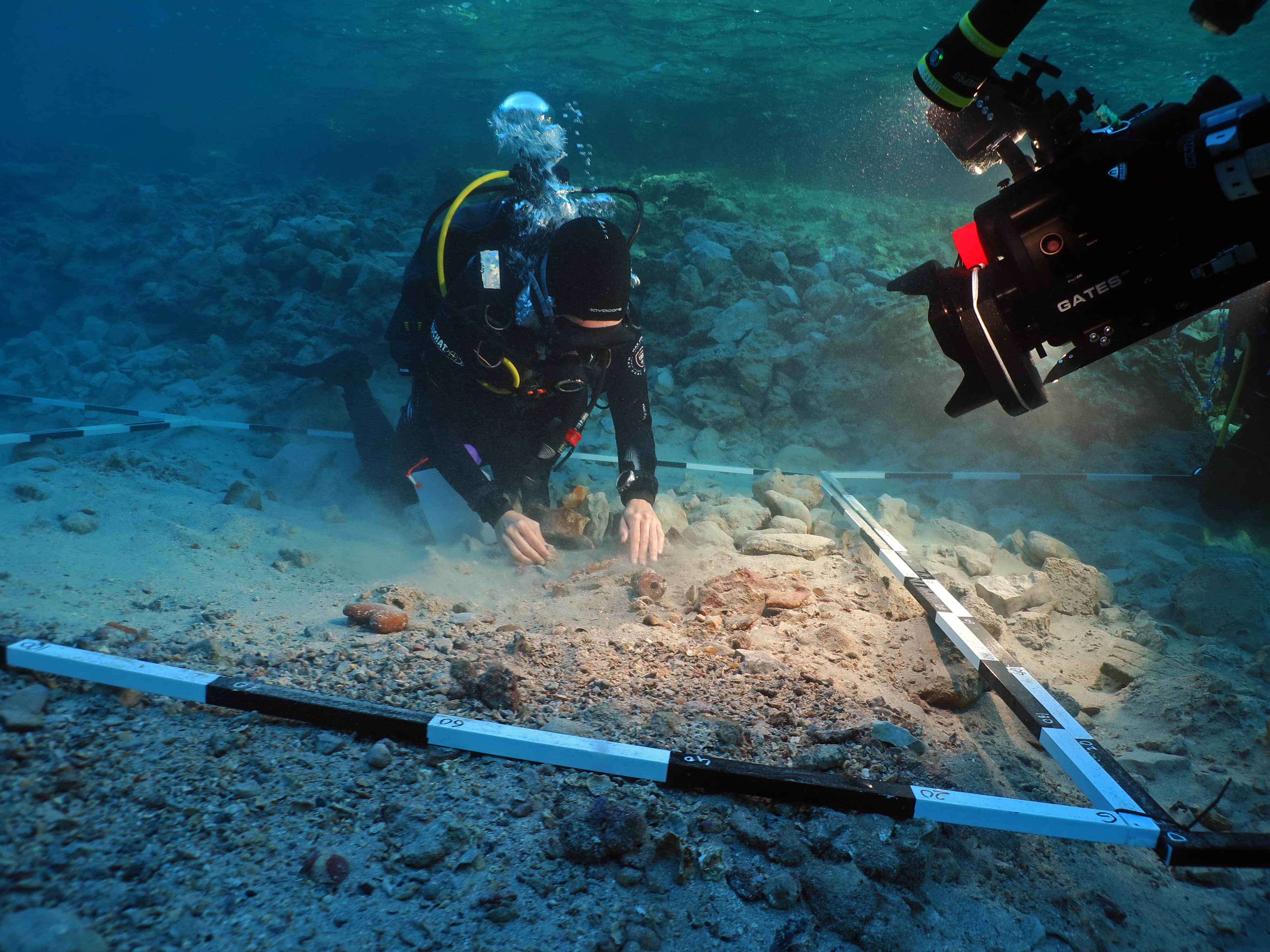
Archaeological Support in Underwater Excavations
AKD considers cultural heritage preservation an integral component of climate adaptation efforts.
Within this scope, the organization supports underwater excavations at Bozukkale, Çamçalık, and Kızlan, where Early Bronze Age and Hellenistic artifacts remain unprotected.
Details of Supported Underwater Excavations
These excavations — conducted by the Institute of Marine Sciences and Technology at Dokuz Eylül University and SUDEMER (Underwater Cultural Heritage and Maritime History Research Center), led by Assoc. Prof. Dr. Harun Özdaş — are part of the Blue Heritage Project. The project aims to identify, map, and catalogue Türkiye’s underwater cultural heritage and develop management models. Excavations are carried out with the permission of the Ministry of Culture and Tourism and with the support of the Presidency of Strategy and Budget. AKD has supported the work through protocols signed in 2023 and 2024.
Bozukkale Underwater Excavation
Located in ancient Loryma (Bozukkale) near Marmaris, this excavation explores the only known Archaic-period shipwreck in the Mediterranean carrying a collection of statues. Dating to the late 7th century BCE, the wreck contains artifacts originating from Egypt, Syria, Cyprus, and the Aegean — now exhibited at the Bodrum Museum of Underwater Archaeology.
Çamçalık Underwater Excavation
This site, situated off the Bozburun Peninsula, contains the oldest known port remains discovered in Anatolia. Submerged due to sea-level changes, the site houses the largest collection of Bronze Age ceramics in the region, including artifacts bearing the undeciphered Minoan Linear A script.
Kızlan Underwater Excavation
Off the coast of Datça’s Kızlan area lies a 17th-century Ottoman shipwreck containing Janissary rifles, grenades, cannonballs, swords, pipes, and numerous Chinese porcelains preserved in wooden chests. The wreck, believed to have sunk during a voyage to Istanbul, was examined on-site by Minister of Culture and Tourism Mehmet Nuri Ersoy.
Moving Forward
By bridging cultural heritage preservation with climate adaptation, the Mediterranean Conservation Society works to safeguard the unique cultural and natural richness of the Mediterranean for future generations.
Photo Credit: Harun Özdaş
REFERENCES