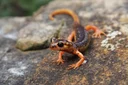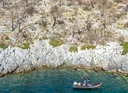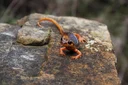

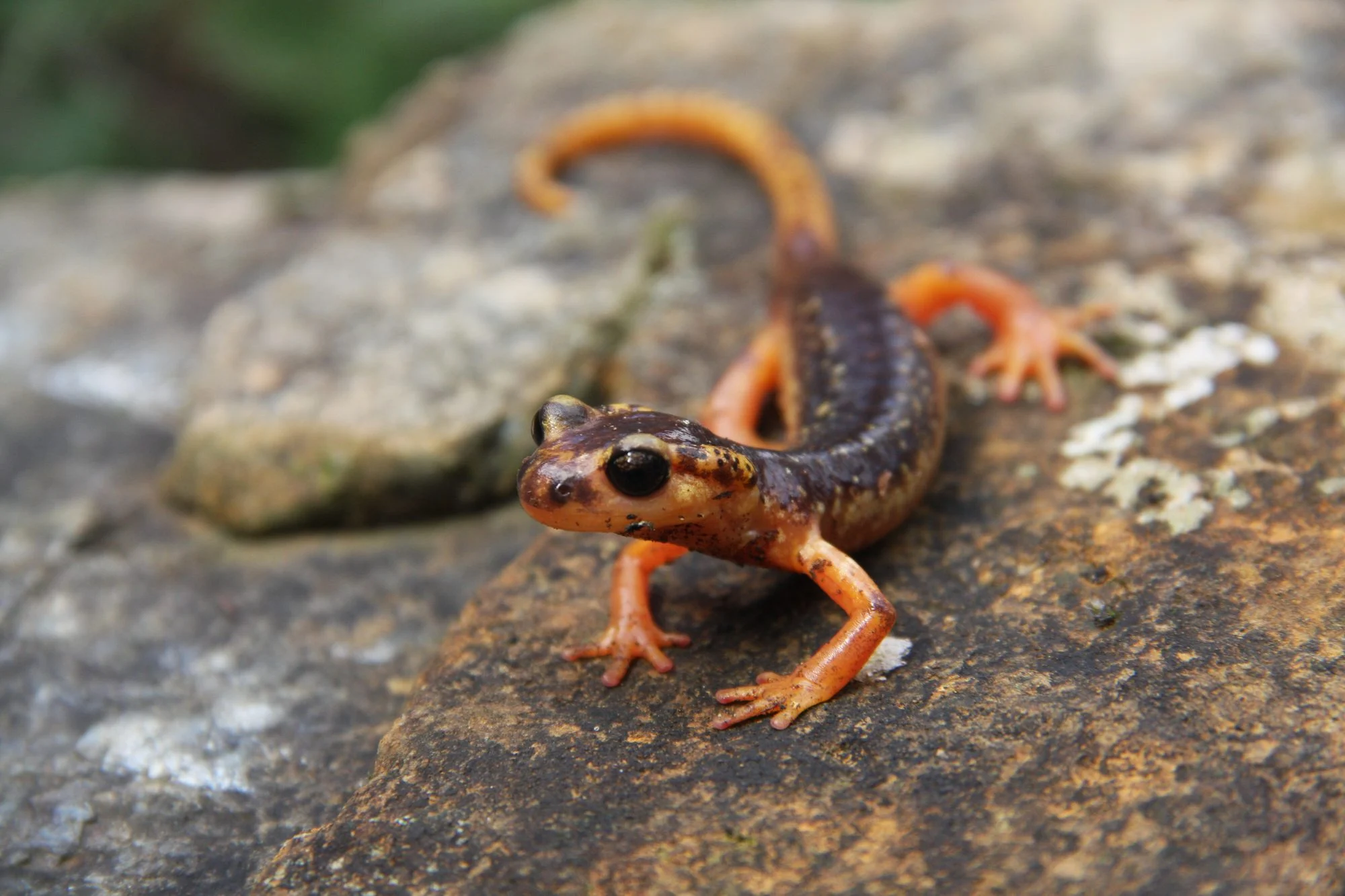
The forest fires in and around Marmaris destroyed the habitats of many species and of local residents, and of the endangered Marmaris salamander.
Projected loss, in two weeks
Lycian salamanders
The Marmaris salamander will wake up this coming November to a completely changed landscape.
What should be done after the fire?
Since 2018 we have been working in and around Marmaris to determine the habitats of the Marmaris salamander, the species’ population status and the threats to the species. Forest fires, littering of forest areas and construction are among the foremost threats to the continued survival of the Marmaris salamander. To protect the Marmaris salamander in situ against these threats, we have worked with many institutions, above all the Marmaris National Park Directorate and Marmaris Municipality, and with our volunteers. To all these efforts was added taking part in putting out the forest fires that we had identified as a threat to the Marmaris salamander.
For salamanders to get through the effects of this fire with the least harm, the forest needs to regenerate itself within its natural cycle. The nutrient-rich layer of soil in the areas where forest fires have occurred will provide the damp cover in which salamanders can survive this winter, while also allowing the seeds of the plant species that represent forest and maquis habitats to germinate. It should also be remembered that any clearings that may form in these areas will host the forest’s other living things, even if they contain no tree species. Although there is a great deal of work to be done after the fire, it is important that the ecosystem is monitored as a whole and that the necessary interventions are made in the light of scientific data. For this reason, we have begun work to determine how the Marmaris salamander has been affected by the fires, in order to contribute to the rehabilitation planning of the burned forests in and around Marmaris.
The danger that we expected to occur for the Marmaris salamander over the next 50 years, as a result of climate change and the associated increase in carbon emissions, was experienced in two weeks. Just as we must be prepared for climate change from now on, detailed plans covering all the species living in the burned areas must also be made for the rehabilitation of those areas. Every conservation and rehabilitation effort carried out in these areas is a lifeline for the sustainability of the populations of Lycian salamanders and of the species whose lives depend on natural forest and maquis.