

Mediterranean Conservation Foundation
TREN
Support us

Field programme · Climate Change

Seawater temperature monitoring

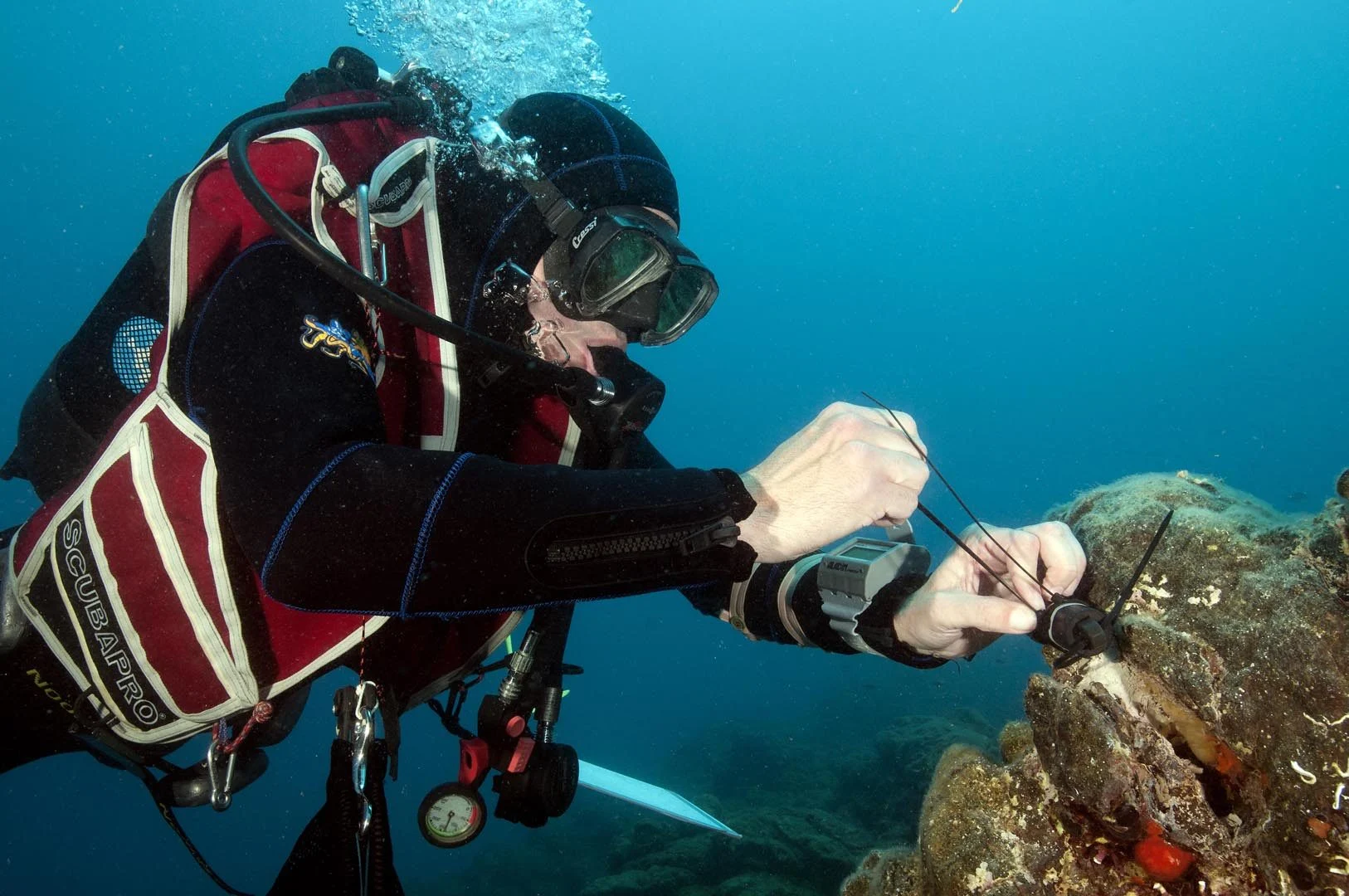
Seawater temperature refers to the thermal measurements taken from the sea surface down through the water column and should not be confused with air temperature.

Photo: Akdeniz Koruma Vakfı Arşivi

Started
2015
Where
Gökova Bay; Fethiye-Göcek and Kaş-Kekova; Datça-Bozburun SEPA areas
Measurement
every 5 metres, hourly
Network the data are shared with
T-MEDNet

At a glance

  1. Seawater temperature refers to the thermal measurements taken from the sea surface down through the water column and should not be confused with air temperature.

  2. In the Mediterranean, surface water temperatures generally range between 26–29°C during the summer, although seasonal and regional variations are significant.

  3. Between August and September 2023, temperatures of 27–29°C were recorded at depths of up to 30 m, and during October 2023, 26°C was measured even at 40 m depth.

  4. To track thermocline levels, temperature profiles and temporal changes, temperature loggers are placed every 5 metres and record hourly data.

26–29°C
Surface water temperature in the Mediterranean in summer
26°C
Temperature measured at 40 m depth during October 2023
3–4°C
Increase compared to the previous year

Relationship between climate change and seawater temperature

Seawater temperature refers to the thermal measurements taken from the sea surface down through the water column and should not be confused with air temperature. Compared to the atmosphere, the sea warms and cools more slowly; however, these changes can have far more critical consequences for marine life. In the Mediterranean, surface water temperatures generally range between 26–29°C during the summer, although seasonal and regional variations are significant. In coastal areas such as Gökova, Fethiye, and Kaş, these variations can be observed both across depths and throughout the season.

Impact of seawater temperature on ecosystems

  • Native species under threat

    Elevated temperatures disrupt the reproduction, migration and survival cycles of native species.

  • Favourable conditions for invasive species

    Invasive species originating from the Red Sea and Indian Ocean are more tolerant to these changes and can spread rapidly into new areas.

  • Habitat degradation

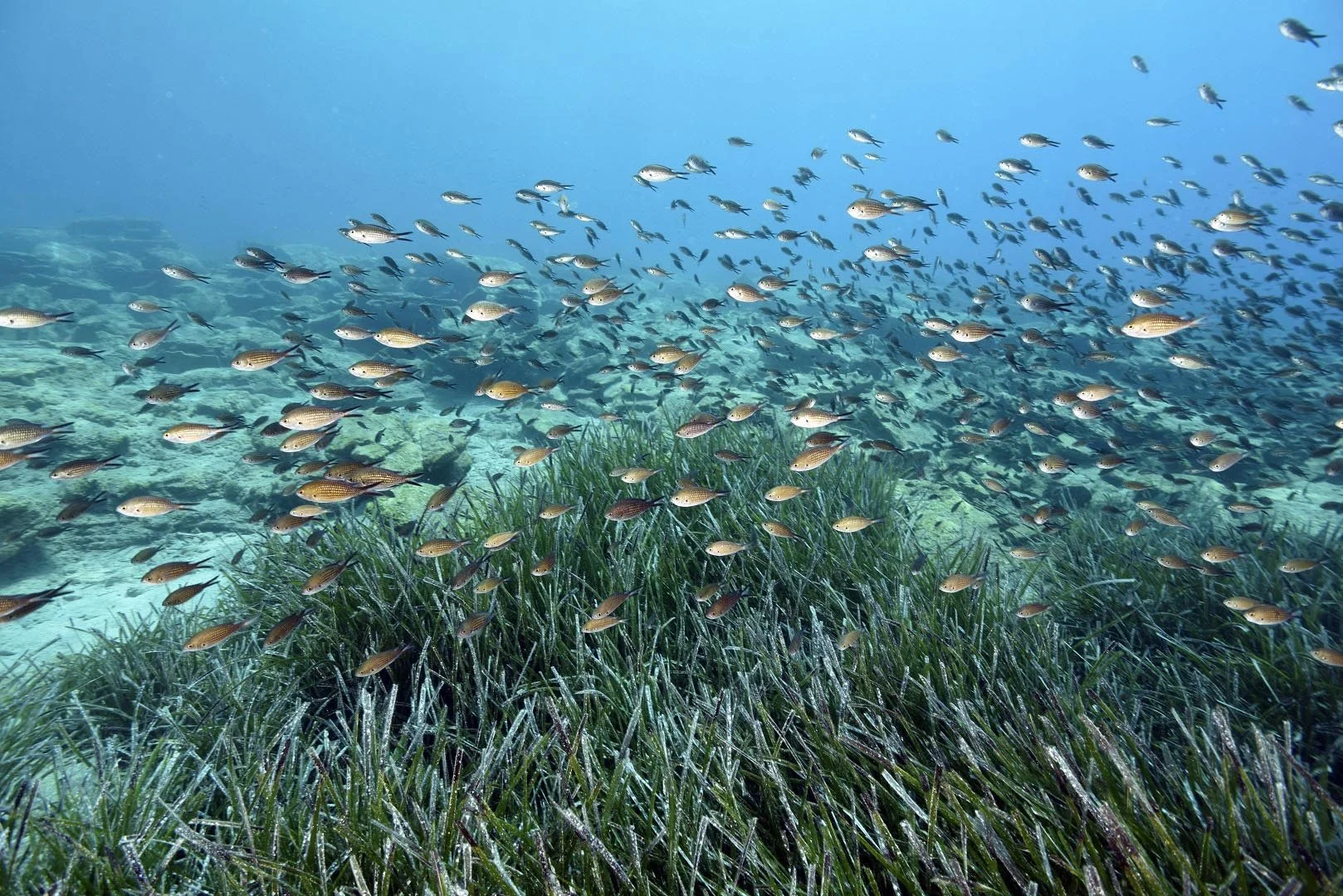
    For example, the range of seagrass meadows such as Posidonia oceanica may shrink rapidly with rising temperatures.

  • Biodiversity loss

    A decline in species diversity can lead to broken food webs and losses in ecological and economic services.

  • Loss of algae

    Exceptional increases in seawater temperature cause corals to expel the symbiotic algae (zooxanthellae) living in their tissues. The loss of these algae causes corals to lose their colour, starting a process known as bleaching. This weakens the corals' energy production and immune systems and can eventually lead to their death. If the temperature increase persists for a long time, coral reef ecosystems suffer serious losses in species diversity and fish populations.

  • Degradation of seagrass meadows

    This affects not only corals but also foundational ecosystems such as seagrass meadows. The degradation of seagrass meadows triggers cascading effects, including a reduction in carbon storage capacity, increased coastal erosion and loss of habitat for marine life.

A small school of fish swimming above a seagrass bed
Photo: Akdeniz Koruma Vakfı Arşivi

Socioeconomic impacts

Seawater temperature trends on Türkiye's Mediterranean coast

30 mDepth to which the thermocline dropped in 2023 (25 m in 2022)

References

  • Bengil, F., Mavruk, S., Kızılkaya, Z., Bengil, E.G.T., Alan, V., Kızılkaya, İ.T. (2021). Descriptive Capability of Datasets as Proxy of Sea Water Temperature in Coastal Systems: An Evaluation from the Aegean Sea. Turkish Journal of Fisheries and Aquatic Sciences, 21(12), 627-635. https://doi.org/10.4194/1303-2712-v21_12_05.
  • von Schuckmann, K., Le Traon, P.-Y., Smith, N., Pascual, A., Djavidnia, S., et al. (2019). Copernicus Marine Service Ocean State Report, Issue 3. Journal of Operational Oceanography, 12(S1), S1–S123. https://doi.org/10.1080/1755876X.2019.1633075.
  • Hughes et al., 2017. Global warming and recurrent mass bleaching of corals, Nature. pHoegh-Guldberg et al., 2007. Coral reefs under rapid climate change and ocean acidification, Science.

Seawater temperature monitoring

What we do

Seawater temperature monitoring network

To understand the impacts of climate change on coastal and marine ecosystems, the Mediterranean Conservation Society began seawater temperature monitoring in Gökova Bay in 2015. In 2020, Fethiye-Göcek and Kaş-Kekova, and in 2022, the Datça-Bozburun SEPA areas were added to the monitoring network.

Measurements every 5 metres

To track thermocline levels, temperature profiles and temporal changes, temperature loggers are placed every 5 metres and record hourly data.

Data shared with T-MEDNet

Since 2015, the collected data have been shared with the T-MEDNet initiative, an observation network on the effects of climate change on coastal marine ecosystems. These contributions support the large-scale, long-term application of standardised monitoring protocols for seawater temperature and biological indicators.

Validation of model and satellite data

Monitoring data from Gökova validate the reliability of model-based (CMEMS) and satellite data for depths of 0–40 m (Bengil et al., 2021). These data feed into the management plans of protected areas and into climate change adaptation strategies.

01Seawater temperature monitoring network

To understand the impacts of climate change on coastal and marine ecosystems, the Mediterranean Conservation Society began seawater temperature monitoring in Gökova Bay in 2015. In 2020, Fethiye-Göcek and Kaş-Kekova, and in 2022, the Datça-Bozburun SEPA areas were added to the monitoring network.

02Measurements every 5 metres

To track thermocline levels, temperature profiles and temporal changes, temperature loggers are placed every 5 metres and record hourly data.

03Data shared with T-MEDNet

Since 2015, the collected data have been shared with the T-MEDNet initiative, an observation network on the effects of climate change on coastal marine ecosystems. These contributions support the large-scale, long-term application of standardised monitoring protocols for seawater temperature and biological indicators.

04Validation of model and satellite data

Monitoring data from Gökova validate the reliability of model-based (CMEMS) and satellite data for depths of 0–40 m (Bengil et al., 2021). These data feed into the management plans of protected areas and into climate change adaptation strategies.

Next steps

We need your support to keep this work going.