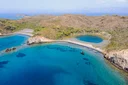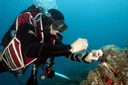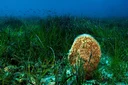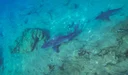

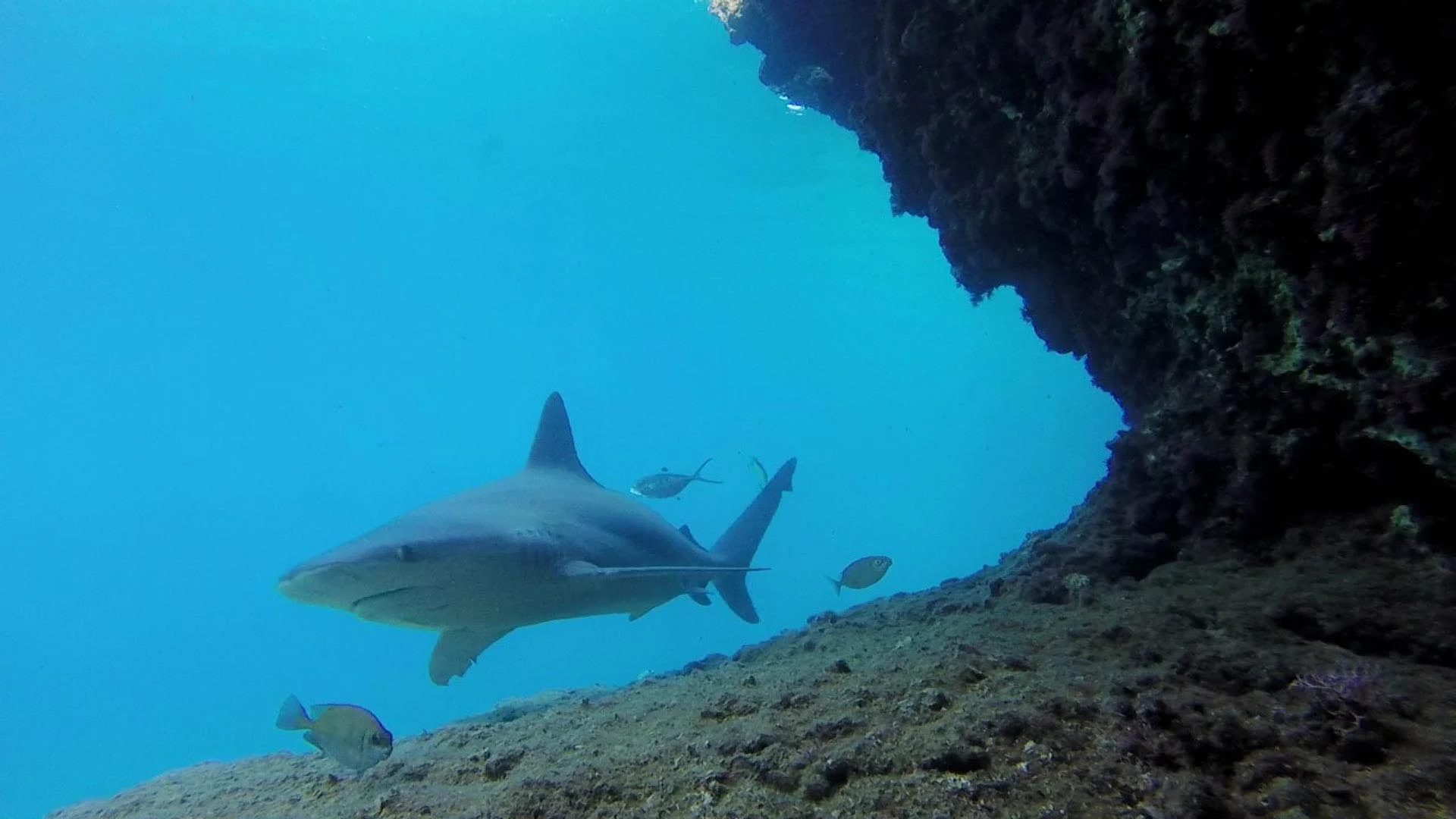
Monitoring work on the sandbar shark (Carcharhinus plumbeus) in the Gulf of Gökova is carried out to obtain information on the species’ behaviour, frequency of occurrence and distribution and on the number of individuals using Boncuk Cove, and to plan conservation work. Under the coordination of the Ministry of Environment and Urbanisation, General Directorate of Nature Conservation (TVKGM) and implemented by the Mediterranean Conservation Society, a full-time camera system was installed in Boncuk Cove in May in order to obtain more data on the sandbar shark in a shorter time.
Full-time camera system
- Temperature loggers added to the underwater cameras aim to determine the effect on the species of rising sea water temperatures caused by climate change.
- In addition, one night-vision camera has been placed on land in order to monitor illegal activities against the sandbar shark in the cove.
- The solar-powered full-time camera system allows live images from all three cameras to be viewed remotely via a GSM operator.
Unlike cameras that have so far been able to capture only short-term footage, this system allows more data to be obtained more quickly.
Being part of the solution
The Gulf of Gökova was declared a Special Environmental Protection Area in 1988 in order to safeguard species such as the sandbar shark and their habitats. Protecting these species and their habitats is as important for the world as it is for the Gökova Special Environmental Protection Area. The extinction of this endangered species would be a threat to the food chain that links the lives of many species. For this reason, we are investigating, in many respects, through species and area monitoring and conservation, how to eliminate every factor that threatens the sandbar shark. Boncuk Cove, together with five other coves in the Gulf of Gökova, was declared a “No-Fishing Area” in 2010, and all fishing activity in Boncuk Cove was stopped.
On this important day, I am giving the same message from Boncuk Cove, and I invite everyone to be part of the solution so that illegal activities in Boncuk Cove (amateur and commercial fishing, waste dumping, spearfishing) come to an end.
The installation of the full-time camera system took place in May, and the first footage of a sandbar shark from the underwater cameras was recorded in May. To monitor the sandbar shark, we have since 2006 been carrying out monitoring work, coordinated by the TVKGM of the Ministry of Environment and Urbanisation, in which short-term footage is obtained by snorkelling and with underwater cameras.