
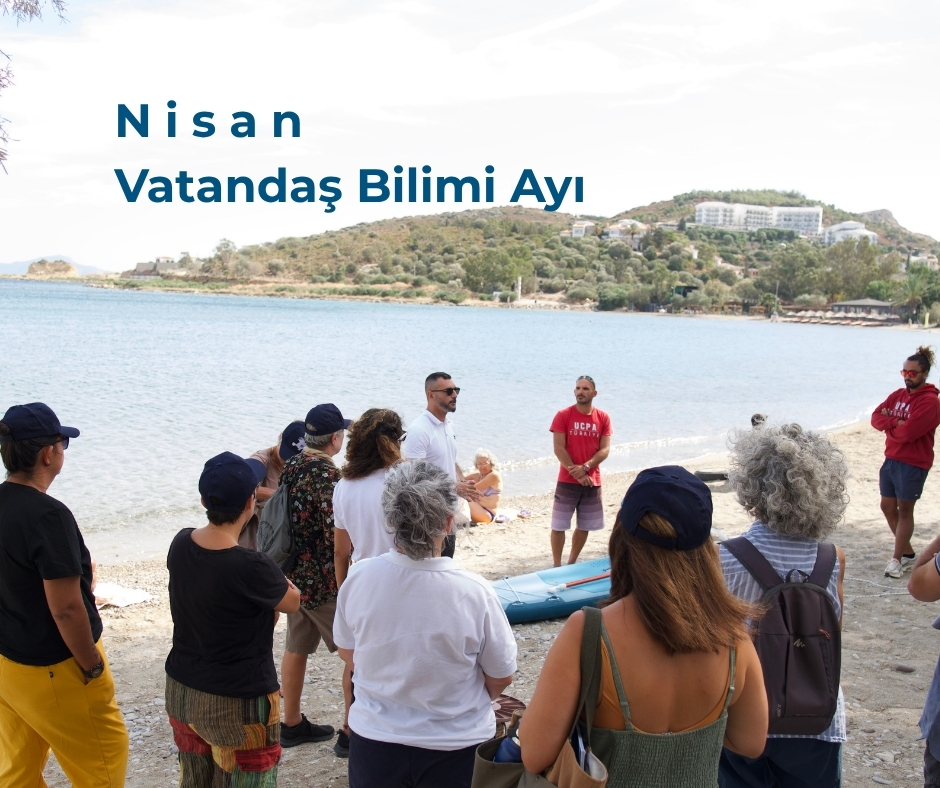
Every year, April is celebrated globally as Citizen Science Month. This month provides an important opportunity to highlight that science is strengthened not only by experts, but through the active participation of diverse communities.
Citizen science is a participatory approach in which volunteers, students, local communities, and anyone with a direct connection to nature contribute to observation, data collection, monitoring, and recording processes. This approach not only supports the production of scientific data, but also helps strengthen our connection to the environment, fosters local ownership, and enhances active participation in conservation efforts.
Throughout April, institutions, universities, civil society organizations, and local communities around the world organize events, trainings, field activities, and workshops to promote citizen science. These efforts encourage community-based data generation across a wide range of topics, including climate change, biodiversity loss, water quality, marine ecosystems, and habitat monitoring.
At Akdeniz Koruma, we believe that citizen science is one of the most effective tools for strengthening conservation efforts at the local level. Through species observations, ghost net reporting, water clarity measurements, phytoplankton sampling, and community-based field activities, we continue to expand this approach along the coasts of Türkiye.
As part of this year’s Citizen Science Month, we organized two gatherings with young people and local communities. The first took place on April 8 with students from Datça Vocational School, and the second on April 12 in Akyaka with local participants.
During the workshop in Datça, we met with students from the Marina and Yacht Management Program. Together, we explored what citizen science is, why it matters, and how individuals can become involved. In addition to theoretical discussions, we examined real-life examples from different field sites and discussed data collection, analysis, and validation processes. At the end of the workshop, a group of volunteer students came together to actively participate in citizen science activities and formed a communication group to stay connected.
In Akyaka, we met with local participants to reflect on the role of citizen science in conservation processes. Together, we discussed how observation, data collection, and local knowledge intersect with scientific research. We also shared examples from our field activities carried out within the scope of the DiverSea project, and collectively reflected on the impact of community participation on both scientific production and conservation outcomes.
These gatherings throughout April once again remind us that citizen science is not just a method, but a culture of learning, producing, and protecting together.
Because the most powerful way to protect nature is to observe it together—and to understand it together.