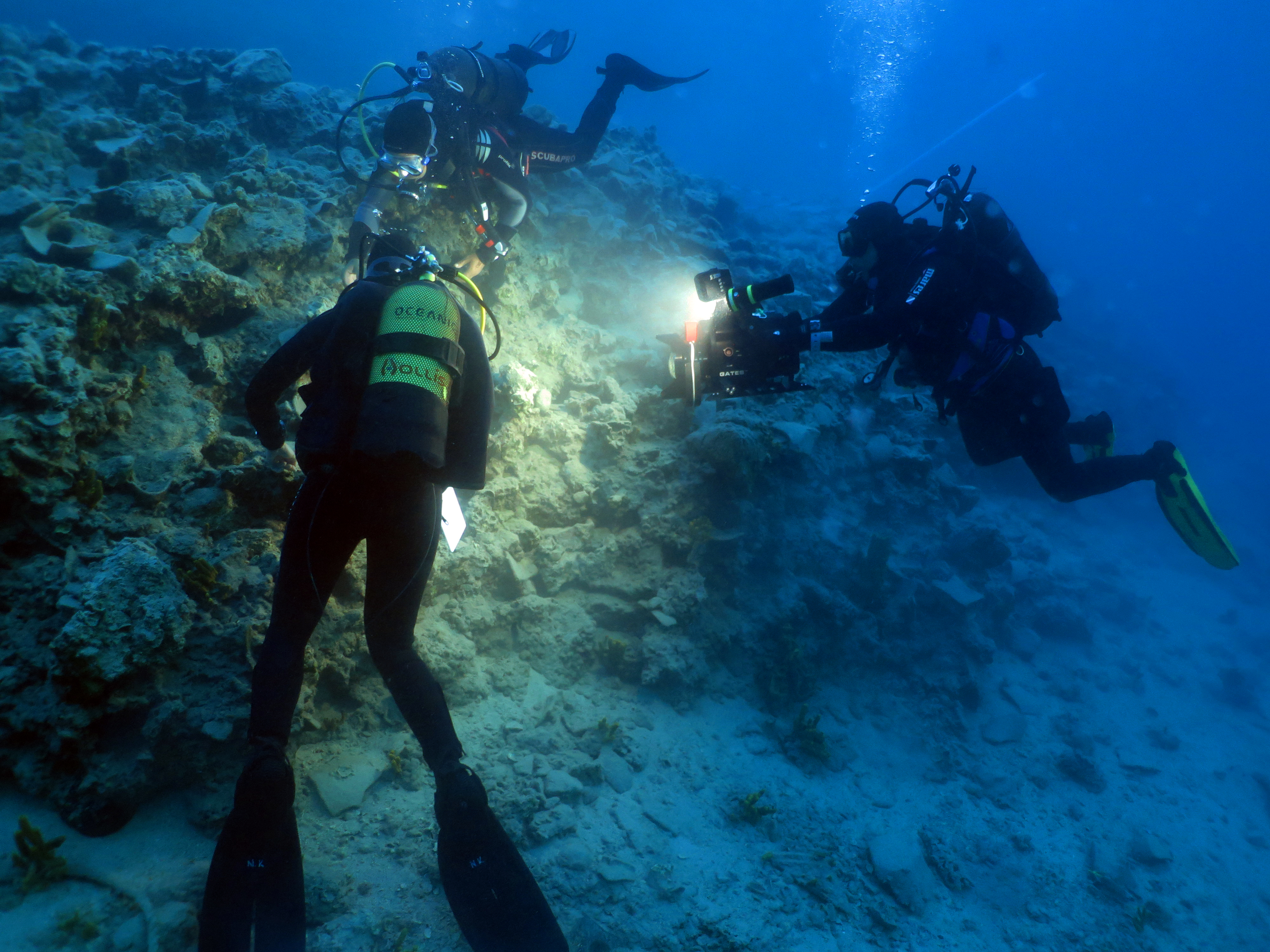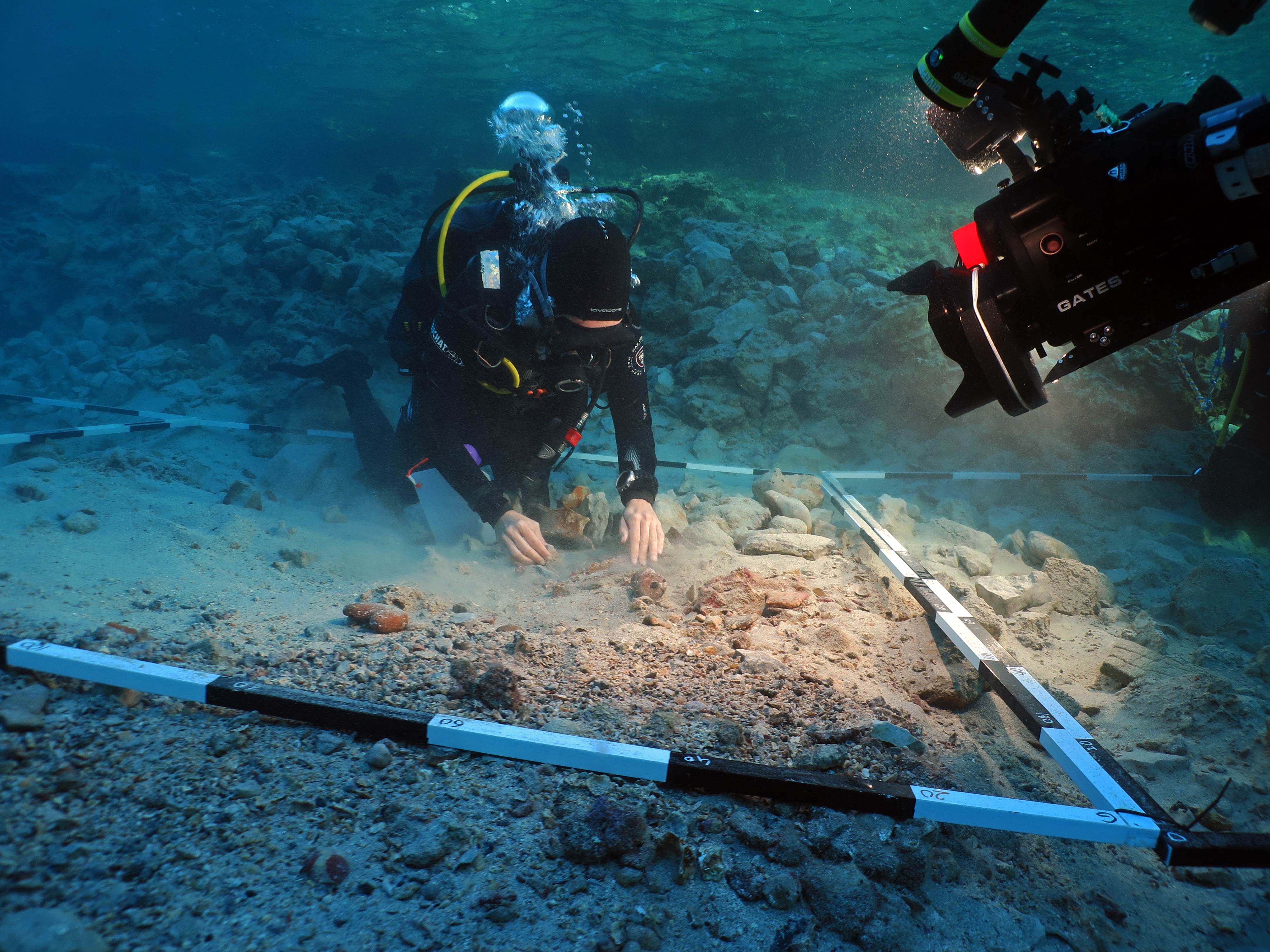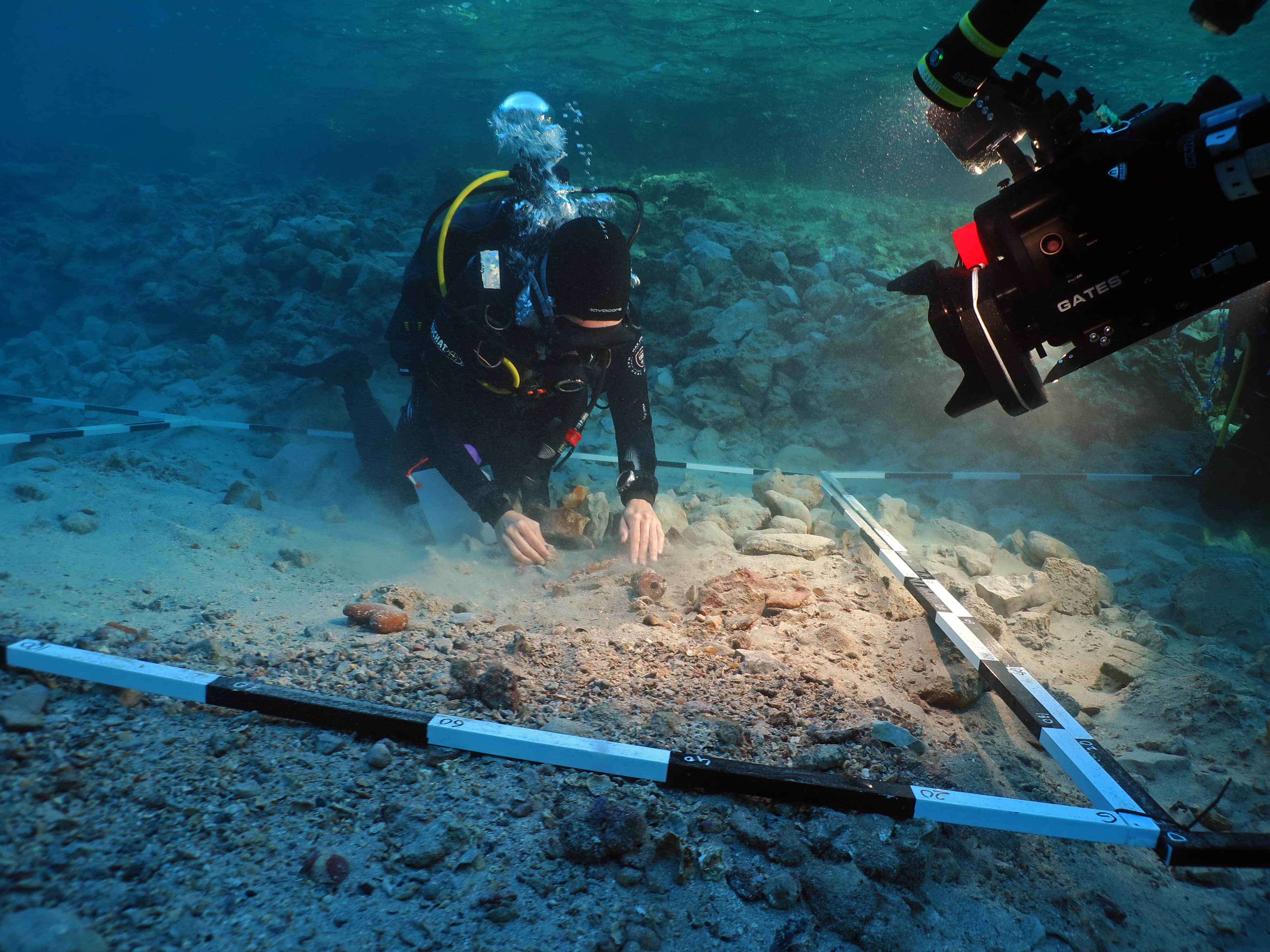
These excavations — conducted by the Institute of Marine Sciences and Technology at Dokuz Eylül University and SUDEMER (Underwater Cultural Heritage and Maritime History Research Center), led by Assoc. Prof. Dr. Harun Özdaş — are part of the Blue Heritage Project. The project aims to identify, map, and catalogue Türkiye’s underwater cultural heritage and develop management models. Excavations are carried out with the permission of the Ministry of Culture and Tourism and with the support of the Presidency of Strategy and Budget. AKD has supported the work through protocols signed in 2023 and 2024.
Bozukkale Underwater Excavation
Located in ancient Loryma (Bozukkale) near Marmaris, this excavation explores the only known Archaic-period shipwreck in the Mediterranean carrying a collection of statues. Dating to the late 7th century BCE, the wreck contains artifacts originating from Egypt, Syria, Cyprus, and the Aegean — now exhibited at the Bodrum Museum of Underwater Archaeology.
Çamçalık Underwater Excavation
This site, situated off the Bozburun Peninsula, contains the oldest known port remains discovered in Anatolia. Submerged due to sea-level changes, the site houses the largest collection of Bronze Age ceramics in the region, including artifacts bearing the undeciphered Minoan Linear A script.
Kızlan Underwater Excavation
Off the coast of Datça’s Kızlan area lies a 17th-century Ottoman shipwreck containing Janissary rifles, grenades, cannonballs, swords, pipes, and numerous Chinese porcelains preserved in wooden chests. The wreck, believed to have sunk during a voyage to Istanbul, was examined on-site by Minister of Culture and Tourism Mehmet Nuri Ersoy.
Moving Forward
By bridging cultural heritage preservation with climate adaptation, the Mediterranean Conservation Society works to safeguard the unique cultural and natural richness of the Mediterranean for future generations.
Photo Credit: Harun Özdaş
Gallery