
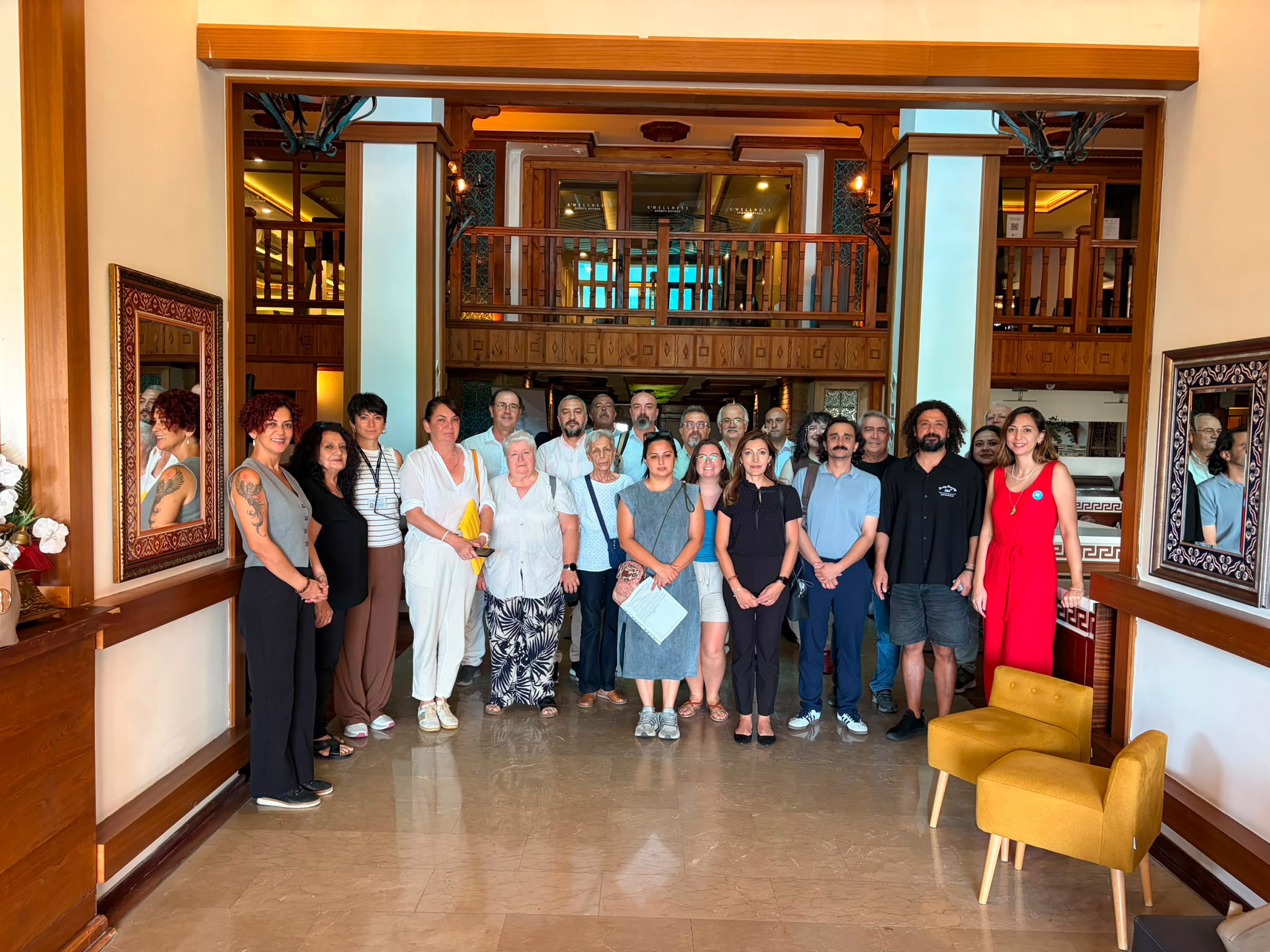
Ahead of COP31, which will be hosted by Türkiye in Antalya, we came together in Muğla with representatives of city councils, local governments, and civil society organizations to jointly assess local priorities for the protection of the Mediterranean.
The meeting, held as the first event of the Muğla City Councils Union, brought together city councils from Datça, Marmaris, Ula, Ortaca, Köyceğiz, and Menteşe, as well as representatives from local governments and civil society organizations. The gathering created a space for local stakeholders from different districts of Muğla to discuss environmental and climate-related challenges around the same table.
In the first part of the meeting, we introduced the work of the Mediterranean Conservation Foundation and shared our approach to COP31 through a presentation titled “COP31 and the Importance of the Mediterranean.” After participants shared the challenges, views, and expectations from their own regions, Cihan Dündar, Head of the Climate Change and Zero Waste Department at Muğla Metropolitan Municipality, gave a presentation on climate change and marine ecosystems. The meeting continued with a workshop facilitated by Marine and Climate Policy Expert Aygün Karlı, focusing on the priorities that should be brought to COP31.
During the workshop, a wide range of issues were discussed, including microplastic pollution, blue justice and climate justice, drought and water resource management, tourism pressure, wastewater management, wildfires, mining, energy investments, marina activities, and the protection of natural areas. The discussions emphasized that environmental and climate challenges are closely interconnected, and highlighted the need to strengthen conservation policies, integrate scientific data into decision-making processes, and improve cooperation between public institutions and local governments.
The meeting also highlighted the need for existing international mechanisms, such as the Mediterranean Action Plan, developed under the leadership of the United Nations Environment Programme (UNEP), and the Barcelona Convention, which provides its legal framework, to be used more effectively in local and national environmental policies. COP31 was also considered an important opportunity to make local environmental challenges more visible, bring the implementation of existing commitments back onto the agenda, and strengthen advocacy efforts.
As the Mediterranean Conservation Foundation, we believe that discussions on the future of the Mediterranean should take place not only at international negotiation tables, but also in the regions where the impacts of the climate crisis are directly experienced. We will continue to bring together different actors and work to ensure that the knowledge, experience, and priorities of local stakeholders are more visible in the COP31 process, while carrying voices from the Mediterranean into the climate agenda.
The event concluded with a lionfish tasting, reflecting one of the field-based approaches supported through Mediterranean Conservation’s New Fish programme, which promotes the consumption of non-native species. Participants tasted lionfish prepared by Sepia Restaurant in Akçapınar. By encouraging the consumption of non-native species such as lionfish, which is spreading across the Mediterranean, the programme aims to help reduce their pressure on marine ecosystems while also creating alternative economic value for small-scale fishers.