

Mediterranean Conservation Foundation
TREN
Support us

Site · Climate Change

Wetlands

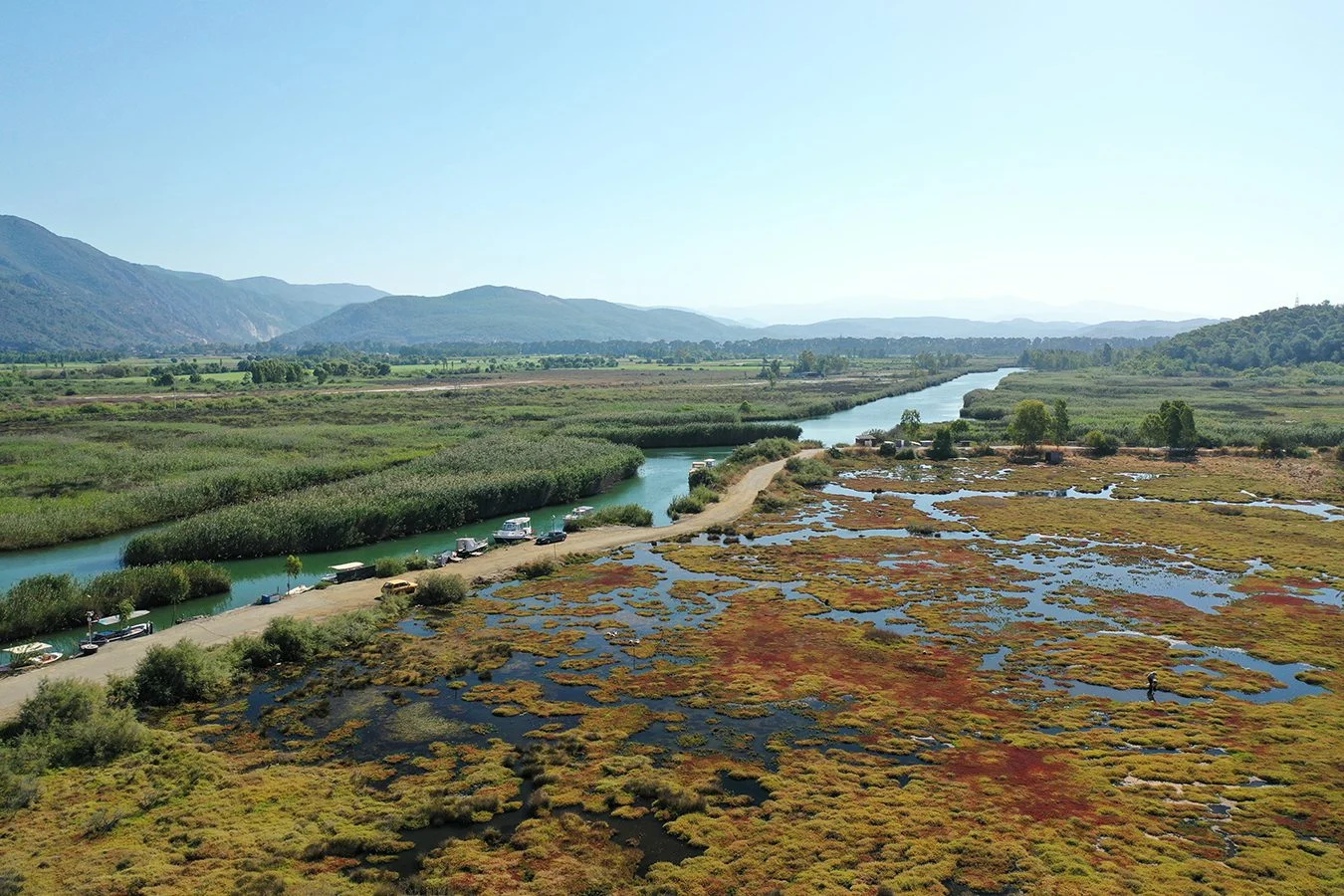
Wetlands, including ponds, rivers, estuaries, floodplains, wet meadows, lakes and seagrass meadows, are among the most productive ecosystems in the world.

Photo: Akdeniz Koruma Vakfı Arşivi

Where
Kadın and Akçapınar Streams in Gökova Bay
Share of the Mediterranean Basin
about 2.5%
With whom
Tour du Valat; Muğla Sıtkı Koçman University; Ula Municipality

At a glance

  1. Wetlands, including ponds, rivers, estuaries, floodplains, wet meadows, lakes and seagrass meadows, are among the most productive ecosystems in the world.

  2. 48% of Mediterranean wetlands have been lost, and 36% of the species that inhabit them face extinction threats.

  3. Such areas around the world store 40% of the world's carbon and play a significant role in combating the climate crisis.

  4. Between 1970 and 2013, 51% of global wetlands were lost.

  5. As the Mediterranean Conservation Society, in 2023 we began implementing the “Green Light for Mediterranean Wetlands” protocol in Gökova, Türkiye.

%48
Mediterranean wetlands lost
%36
Species in these areas facing extinction threats
%40
Carbon stored by wetlands
55 kat
Long-term carbon storage rate of seagrasses and salt marshes compared with tropical rainforests

About

Wetlands, including ponds, rivers, estuaries, floodplains, wet meadows, lakes and seagrass meadows, are among the most productive ecosystems in the world. Globally, these areas have been declining since 1970. In the Mediterranean, 48% of wetlands have been lost, and 36% of the species that inhabit them face extinction threats, with 41% of those being endemic. Although these areas cover only about 2.5% of the Mediterranean Basin, they are home to more than a third of all species. Such areas around the world store 40% of the world's carbon and play a significant role in combating the climate crisis.

Ecosystem services

  • Water and food security

    Wetlands in the Mediterranean support millions of people by ensuring water and food security. They purify water from pollutants, provide drinking water for humans and animals, and support agriculture, industry and energy production. They regulate water flow, store water during floods, and release it during droughts. Wetlands supply food for human consumption and support the livelihoods of local communities.

  • The most effective carbon sinks

    These ecosystems are crucial in mitigating climate change in the Mediterranean, a region warming 20% faster than the global average. When managed well and in good environmental condition, wetlands are among the world's most effective carbon sinks, as highlighted in a meta-analysis of the carbon pools and carbon sequestration potential of wetland ecosystems in the European Union, developed by the European Topic Centre on Spatial Analysis and Synthesis (ETC-UMA).

  • Coastal wetland ecosystems

    Coastal wetlands, especially seagrasses and salt marshes, have long-term carbon storage rates 55 times higher than tropical rainforests. However, degraded wetlands can release significant amounts of CO2 back into the atmosphere, exacerbating global warming.

  • Mitigating the impacts of climate change

    Wetlands also play a critical role in mitigating climate change impacts such as flooding, coastal storm surges, sea-level rise and saltwater intrusion. Among the various habitat types, coastal wetlands, as recognised by the Protocol on Integrated Coastal Zone Management (ICZM) of the Barcelona Convention, are essential in land-sea interactions.

  • A biodiversity hotspot

    Such habitats are vital in the Mediterranean as a biodiversity hotspot with a high degree of endemism. Despite occupying only 2-3% of the Mediterranean Basin, they provide shelter for 30% of vertebrate populations. Countless plant and animal species, including migratory birds and migratory fish populations, depend on Mediterranean wetlands for survival.

  • Recreational opportunities

    In addition to providing recreational opportunities, wetlands attract tourists and support local economies. The Mediterranean Basin is one of the world's most popular tourist destinations, and these areas of exceptional beauty are popular destinations for activities such as hiking, boating, fishing and birdwatching.

Current state of wetlands

%51Wetlands lost between 1970 and 2013

Why are wetlands disappearing in Türkiye?

  • Agriculture

    The largest factor in the loss of Mediterranean wetland ecosystems. Large areas have been drained and converted for agricultural use.

  • Development

    From ever-expanding industry and urbanisation to coastal tourist complexes, infrastructure development has destroyed much of the Mediterranean's natural heritage; these areas, particularly in coastal regions, are at the forefront of land-use changes.

  • Hydrological changes

    Few wetland ecosystems maintain natural hydrological cycles today: dams, levees, and flows redirected for irrigation and other purposes all reduce nature's self-regulation capacity and disrupt ecological processes.

  • Sedimentation/erosion

    Wetland vegetation plays a crucial role in keeping waterways clean; when it is removed for grazing or development, banks erode, followed by sedimentation.

  • Pollution

    Agriculture, industry and urban centres all pollute these areas, harming biodiversity and reducing the resilience of natural processes.

  • Invasive species

    Whether introduced deliberately or accidentally, alien species in these habitats can outcompete native species and disrupt the balance of ecosystems. As waterways serve as networks through which new species spread, the problem becomes more complex.

  • Climate change

    When preserved, these ecosystems can help defend us against climate change, yet they are themselves under direct threat. Rising droughts and storms on our warming planet damage these areas, while rising sea levels will submerge many Mediterranean coastal wetland ecosystems in the coming decades.

Sustainable Development Goals

  • SDG 6

    Ensure access to water and sanitation for all and sustainable water management.

  • SDG 13

    Take urgent action to combat climate change and its impacts.

  • SDG 14

    Conserve and sustainably use the oceans, seas and marine resources for sustainable development.

  • SDG 15

    Protect, restore and promote the sustainable use of terrestrial ecosystems; sustainably manage forests; combat desertification; halt and reverse land degradation; and halt biodiversity loss.

Wetlands

What we do

“Green Light for Mediterranean Wetlands”

As the Mediterranean Conservation Society, in 2023 we began implementing the “Green Light for Mediterranean Wetlands” protocol in Gökova, Türkiye. Through this programme, carried out with Tour du Valat, we aim to identify wetland ecosystems and buffer zones in Gökova, create a wildlife inventory, update the existing literature, identify threats, and work with local stakeholders to take the necessary measures. We also aim to raise awareness about the importance of these areas. Through our work, we plan to identify areas suitable for restoration and develop a strategy that emphasises the conservation-use balance and is shaped by a shared vision with local stakeholders. To this end, to create a roadmap for these areas in Gökova, we held a meeting with public institutions and civil society organisations in the region. In addition, we held a field visit to the Gediz Delta in Izmir and a further meeting for knowledge and experience sharing, with the aim of developing more effective strategies.
Water quality and fish surveys

Together with Muğla Sıtkı Koçman University, we began monitoring water quality using samples taken from a total of 10 stations in Kadın and Akçapınar Streams. In collaboration with the same university, we also carried out visual fish surveys at four different sites along the coast within the Akyaka Marine Protected Area.

Odonate and bird monitoring

While our seasonal water level measurements continue, we are also pursuing our research on the vegetation distribution in the area. In 2024 we began monitoring odonate species, which are key indicators of wetland ecosystems. In the same year we carried out spring and autumn bird surveys in the area, compiling an inventory of migratory birds, and completed the Midwinter Waterfowl Census.

Education and cleanup with students

We organised a two-day educational programme with students attending Cahit Belkıs Güneyman Middle School in Akyaka. On the first day the children learned about wetland ecosystems, and on the second day we visited Gökçe Wetland with them. In addition, together with Ula Municipality, we held a cleanup event to rid this area, an important stopover for migratory birds and local wildlife, of human-generated waste. Through this cleanup we removed approximately 9 tons of debris and waste from the area.

Collaboration protocol with the Ministry of National Education

As the Mediterranean Conservation Society, under the “Protecting and Passing On Natural and Cultural Heritage to Future Generations” programme, we signed a collaboration protocol with the Muğla Provincial Directorate of National Education. Under this protocol, in line with the Muğla Blue Green Schools Project, training will be provided on core topics such as marine and wetland ecosystems, biodiversity, environmental protection and endangered species. Interdisciplinary, student-centred and play-based methods will be used. In addition, activities based on observation and study in nature will be held outside school, thereby raising students' awareness of ecosystem conservation.

01“Green Light for Mediterranean Wetlands”

As the Mediterranean Conservation Society, in 2023 we began implementing the “Green Light for Mediterranean Wetlands” protocol in Gökova, Türkiye. Through this programme, carried out with Tour du Valat, we aim to identify wetland ecosystems and buffer zones in Gökova, create a wildlife inventory, update the existing literature, identify threats, and work with local stakeholders to take the necessary measures. We also aim to raise awareness about the importance of these areas. Through our work, we plan to identify areas suitable for restoration and develop a strategy that emphasises the conservation-use balance and is shaped by a shared vision with local stakeholders. To this end, to create a roadmap for these areas in Gökova, we held a meeting with public institutions and civil society organisations in the region. In addition, we held a field visit to the Gediz Delta in Izmir and a further meeting for knowledge and experience sharing, with the aim of developing more effective strategies.

02Water quality and fish surveys

Together with Muğla Sıtkı Koçman University, we began monitoring water quality using samples taken from a total of 10 stations in Kadın and Akçapınar Streams. In collaboration with the same university, we also carried out visual fish surveys at four different sites along the coast within the Akyaka Marine Protected Area.

03Odonate and bird monitoring

While our seasonal water level measurements continue, we are also pursuing our research on the vegetation distribution in the area. In 2024 we began monitoring odonate species, which are key indicators of wetland ecosystems. In the same year we carried out spring and autumn bird surveys in the area, compiling an inventory of migratory birds, and completed the Midwinter Waterfowl Census.

04Education and cleanup with students

We organised a two-day educational programme with students attending Cahit Belkıs Güneyman Middle School in Akyaka. On the first day the children learned about wetland ecosystems, and on the second day we visited Gökçe Wetland with them. In addition, together with Ula Municipality, we held a cleanup event to rid this area, an important stopover for migratory birds and local wildlife, of human-generated waste. Through this cleanup we removed approximately 9 tons of debris and waste from the area.

05Collaboration protocol with the Ministry of National Education

As the Mediterranean Conservation Society, under the “Protecting and Passing On Natural and Cultural Heritage to Future Generations” programme, we signed a collaboration protocol with the Muğla Provincial Directorate of National Education. Under this protocol, in line with the Muğla Blue Green Schools Project, training will be provided on core topics such as marine and wetland ecosystems, biodiversity, environmental protection and endangered species. Interdisciplinary, student-centred and play-based methods will be used. In addition, activities based on observation and study in nature will be held outside school, thereby raising students' awareness of ecosystem conservation.

Our work on this topic

Next steps

We need your support to keep this work going.