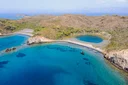
Monitoring since 2013
The Mediterranean Conservation Foundation has been working since 2013 to monitor sandbar sharks and preserve marine biodiversity in Boncuk Cove.


Species · Marine Species
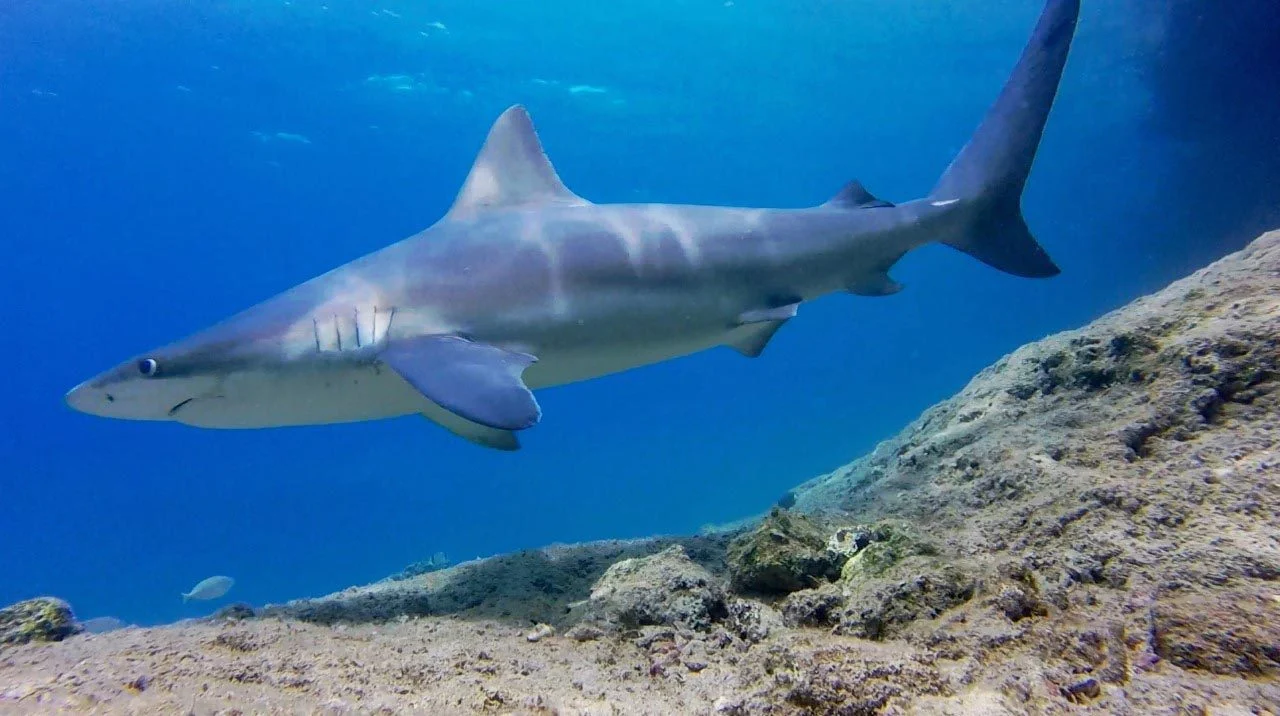
The sandbar shark (Carcharhinus plumbeus) is among the largest coastal shark species in the world.
Photo: Akdeniz Koruma Vakfı Arşivi
The sandbar shark (Carcharhinus plumbeus) is among the largest coastal shark species in the world.
With lifespans exceeding 30 years, they are among the long-lived creatures.
Thirty-seven percent of shark and ray species in the world's waters are under threat.
Bycatch is the greatest threat to sandbar sharks.
The Mediterranean Conservation Foundation has been working since 2013 to monitor sandbar sharks and preserve marine biodiversity in Boncuk Cove.
The sandbar shark (Carcharhinus plumbeus) is among the largest coastal shark species in the world. They reach about one and a half metres in length. With lifespans exceeding 30 years, they are among the long-lived creatures.
2010The year Boncuk Cove became one of the six No-Fishing Zones in Gökova Bay
100 mGeneral depth distribution
60-65 cmTypical length of newborn pups (45-65 cm in the Mediterranean)
For a region to be classified as a shark breeding area:
For this species
The Mediterranean Conservation Foundation has been working since 2013 to monitor sandbar sharks and preserve marine biodiversity in Boncuk Cove.
The Foundation monitors the number of individuals, frequency of sightings, and behaviours of the species with a full-time camera system. Thousands of hours of footage are recorded and analysed each year, and all observed data, including date, time, water temperature, and oxygen saturation, are processed to understand the effects of climate change on the species.
Through the Marine Ranger System, the Foundation patrols Boncuk Cove and immediately informs the relevant authorities when illegal activities are encountered. The Mediterranean Conservation Foundation carries out all these monitoring activities with the permission and coordination of the relevant public institutions.
Based on the proposal we submitted in light of our work on sandbar sharks, the International Union for Conservation of Nature (IUCN) has designated Boncuk Cove, located within Gökova Bay, as an Important Shark and Ray Area (ISRA). Gökova Bay has been declared a relevant area (https://sharkrayareas.org/e-atlas/).