
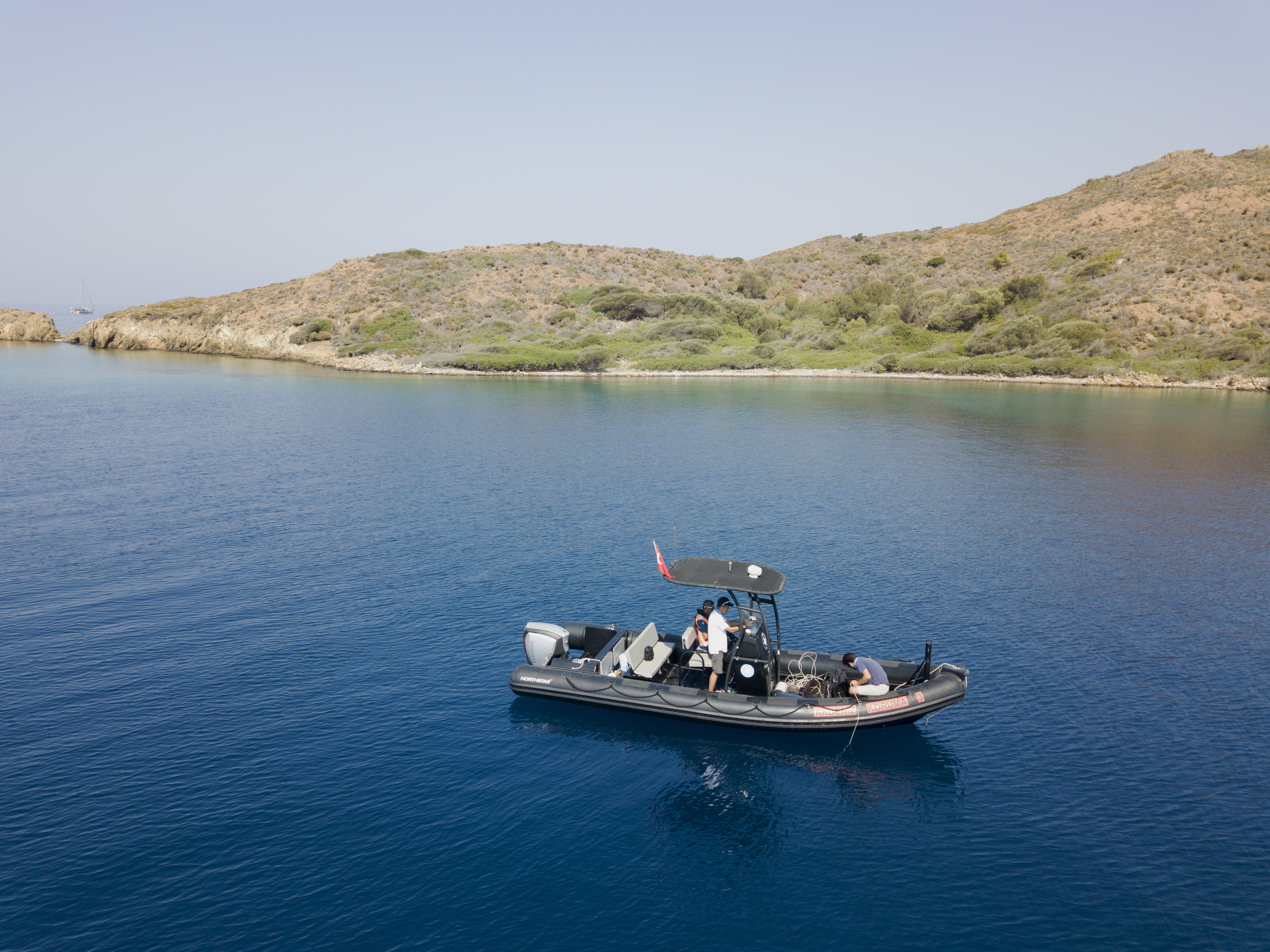
As part of the Mediterranean Conservation's Marine Ranger System, our Marine Rangers continued to contribute to the effective management of marine protected areas through their regular field activities during the first half of 2026.
Established by Mediterranean Conservation in 2013, the Marine Ranger System engages local small-scale fishers as active participants in marine conservation. Today, our Marine Rangers operate in the Gökova, Fethiye-Göcek and Datça-Bozburun Special Environmental Protection Areas, where they record illegal fishing activities, improper anchoring practices and other human activities within no-fishing zones, reporting their observations to the relevant public authorities. Through these efforts, they contribute to the conservation of marine biodiversity, support sustainable fisheries and strengthen the effective management of marine protected areas.
Field Results from the First Six Months
During the first half of 2026, our Marine Rangers:
- Conducted 343 patrols.
- Covered more than 8,000 kilometres during patrols.
- Spent a total of 777 hours in the field.
- Recorded 443 human activities.
- Reported 219 illegal fishing incidents to the relevant authorities.
These activities support the continuous monitoring of marine protected areas while generating valuable data that contribute to evidence-based decision-making by public institutions.
Bringing Together Scientific Knowledge and Local Experience
The Marine Ranger System is built on the integration of local knowledge and scientific approaches. Drawing on years of field experience, our Marine Rangers combine their understanding of the sea with scientific monitoring programmes and close coordination with public authorities, strengthening the effectiveness of marine conservation efforts.
The role of Marine Rangers is not to enforce regulations, but to document observations in the field, inform the relevant authorities and support conservation activities whenever needed. This collaborative model demonstrates how marine conservation can be strengthened through cooperation among different stakeholders.
This year also highlights the growing presence of women Marine Rangers in the field, underscoring the importance of inclusivity and diverse perspectives in marine conservation.